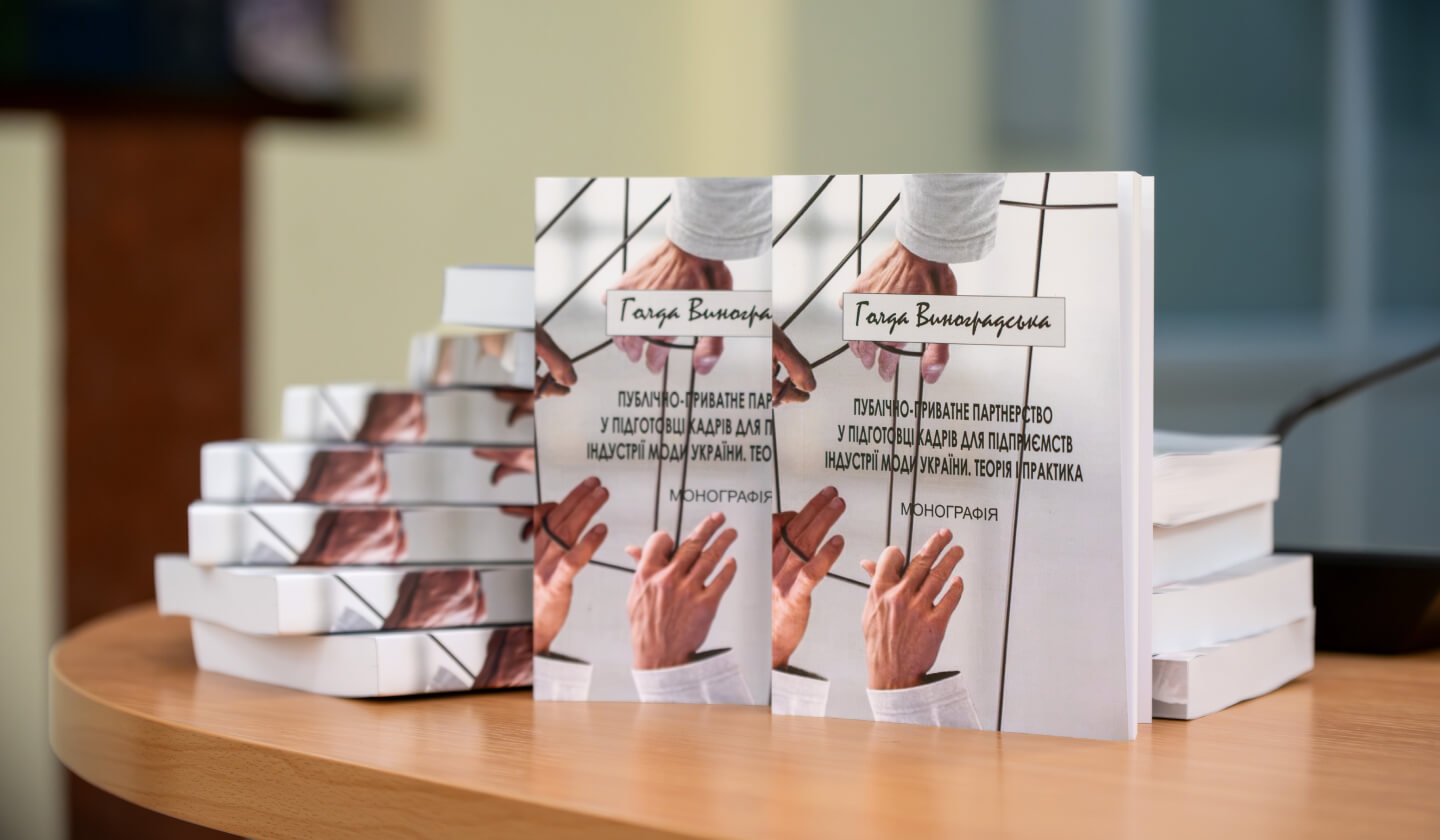
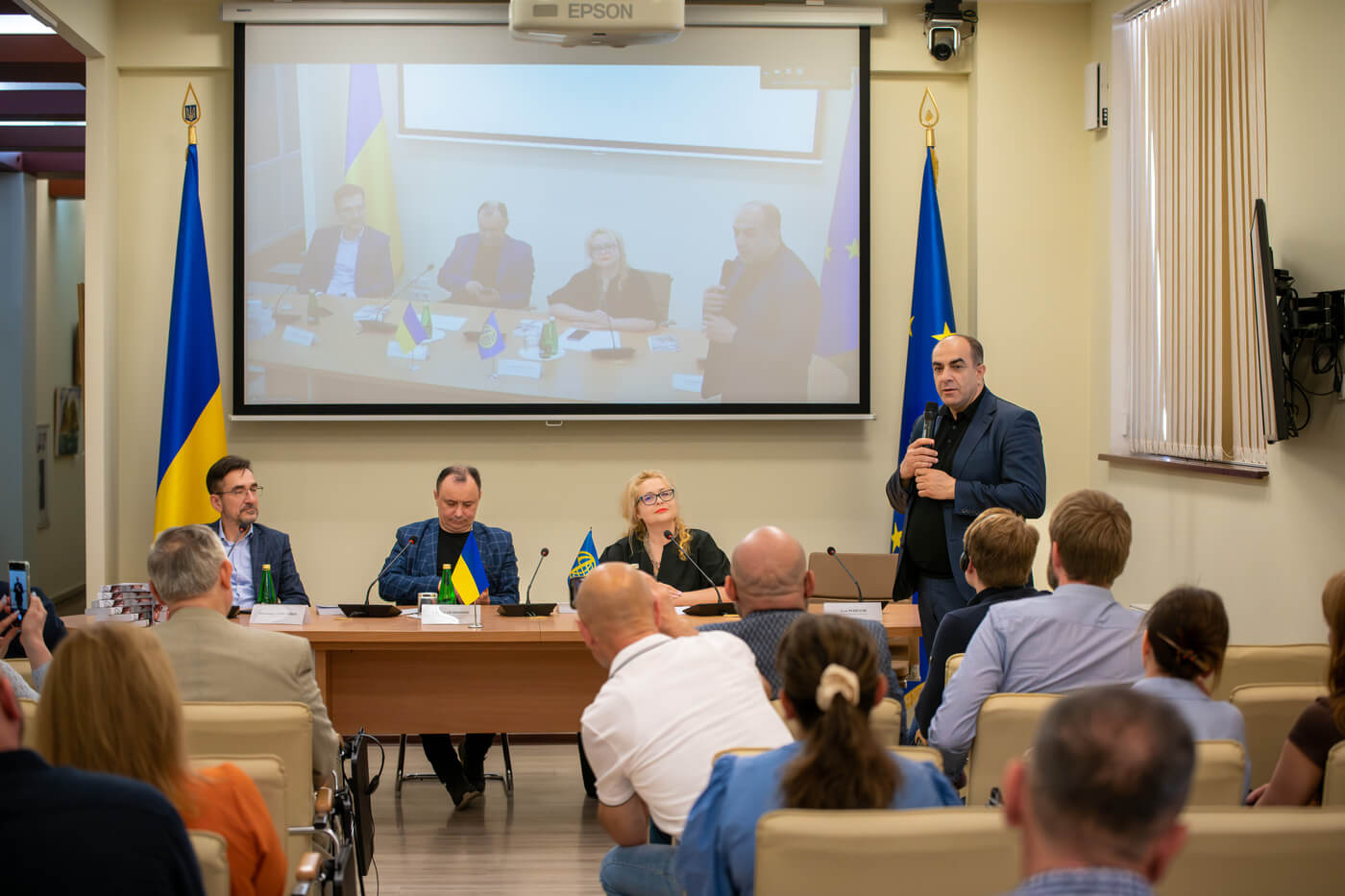
On Tuesday, 16 June 2026, the Media Center hosted the presentation of the monograph titled Public-Private Partnership in Personnel Training for the Ukrainian Fashion Industry Enterprises. Theory and Practice by Golda Vynohradska, PhD in Education and President of the PRORYV International Movement.
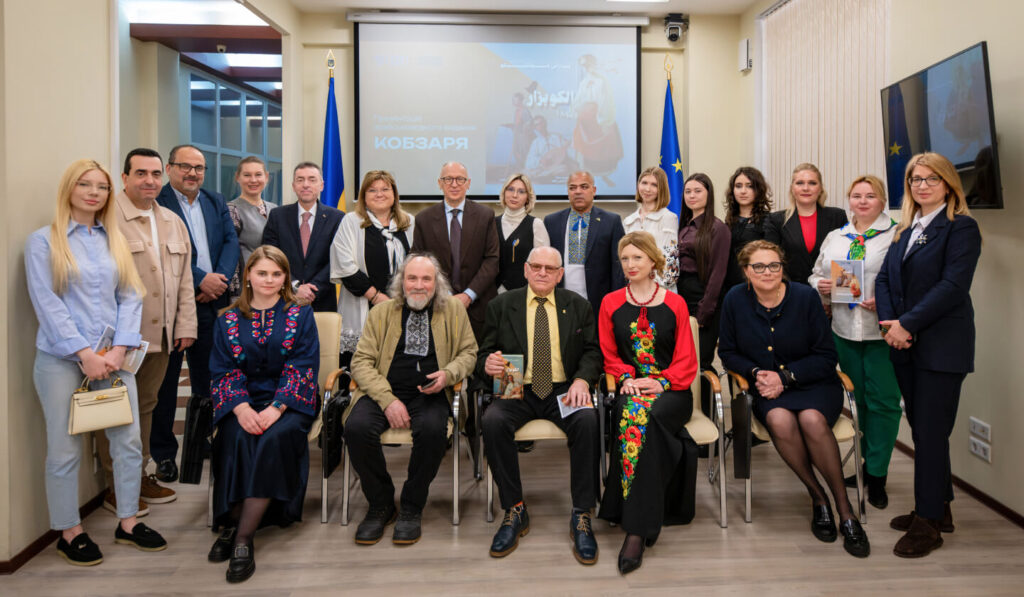
The Public Union PRORYV International Movement organised the event with the support of the State Enterprise ‘Directorate-General for Rendering Services to Diplomatic Missions’. Representatives of the foreign diplomatic corps, public organisations, Ukrainians abroad, journalists, and students joined the event.
The publication summarises over a decade of practical experience in cooperation between the state, business, the educational environment, and international partners in the development of creative industries and professional education, as well as projects implemented by the PRORYV organisation in 23 countries worldwide. At the same time, the monograph addresses issues related to Ukraine’s humanitarian agency, the development of soft power and cultural diplomacy, and the role of public-private partnerships in shaping a modern model of a sustainable society and in building trust among people, businesses, the state, and education.
The event was opened with a welcoming speech by the moderator, Doctor of History and President of the Ukrainian Academy of Geopolitics and Geostrategy Pavlo Hai-Nyzhnyk, who outlined the purpose and format of the event concerning issues of cultural diplomacy and soft power, and also emphasised the role of the Ukrainian diaspora in defending national interests abroad.
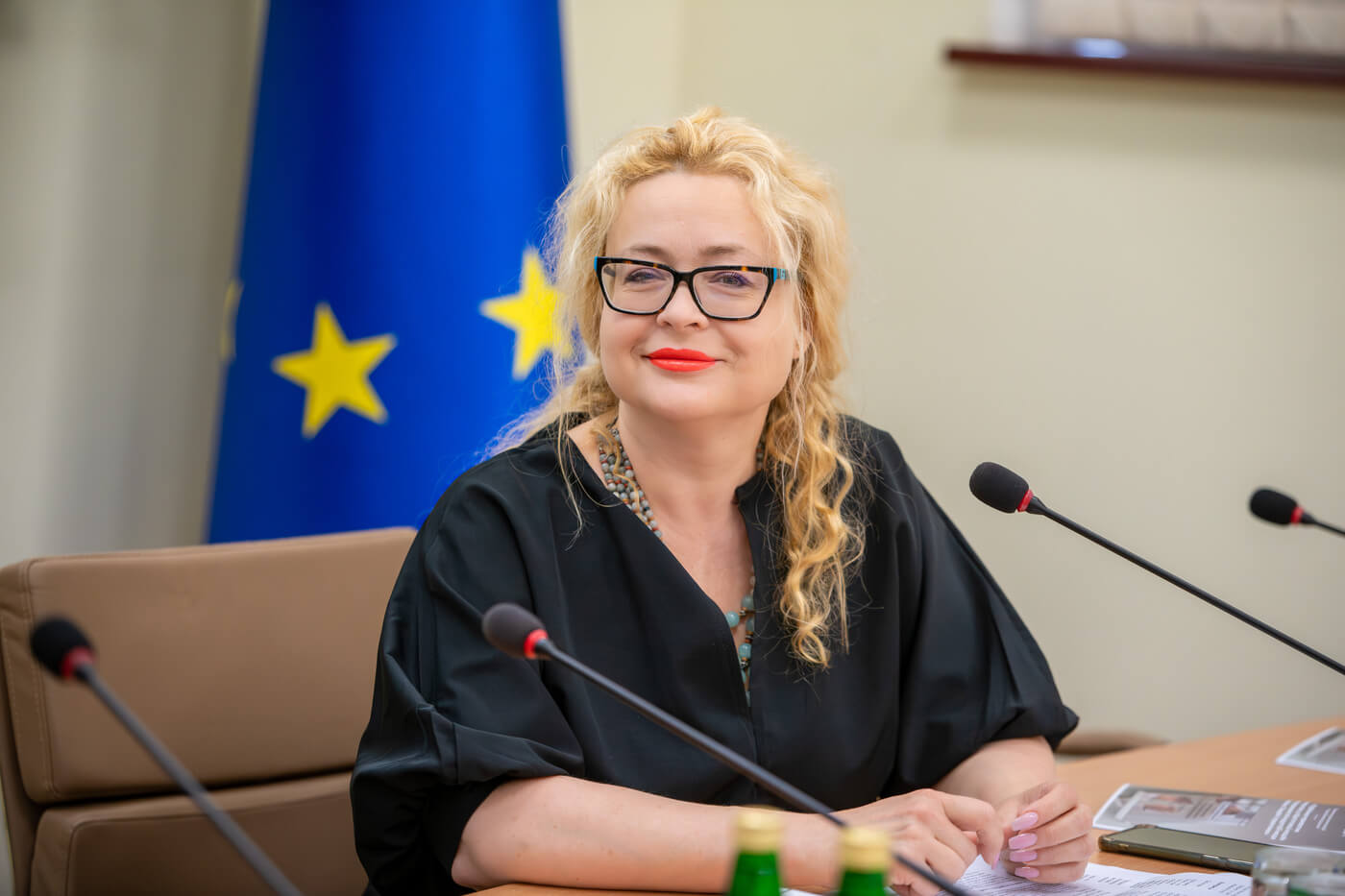
In her speech, Golda Vynohradska spoke about the Fashion Globus Ukraine public organisation’s extensive experience. Since the beginning of the russian-Ukrainian war in 2014, the organisation has combined volunteer activities, cultural diplomacy, educational initiatives, and international economic cooperation. According to the speaker, the first project involved sewing uniforms for the Ukrainian military. Subsequently, this activity grew into large-scale international initiatives implemented in 23 countries worldwide.
Through fashion shows of traditional and modern Ukrainian clothing, the team popularised Ukrainian culture and demonstrated the richness of regional heritage — from Crimea and the Donbas to Halychyna and Slobozhanshchyna. Ms Vynohradska gave examples of successful projects in the USA, Canada, China, Türkiye, South Korea, India, and European and African countries. According to her, they contributed to the formation of a positive image of Ukraine and provided concrete economic results, including the conclusion of multimillion-dollar contracts for Ukrainian manufacturers.
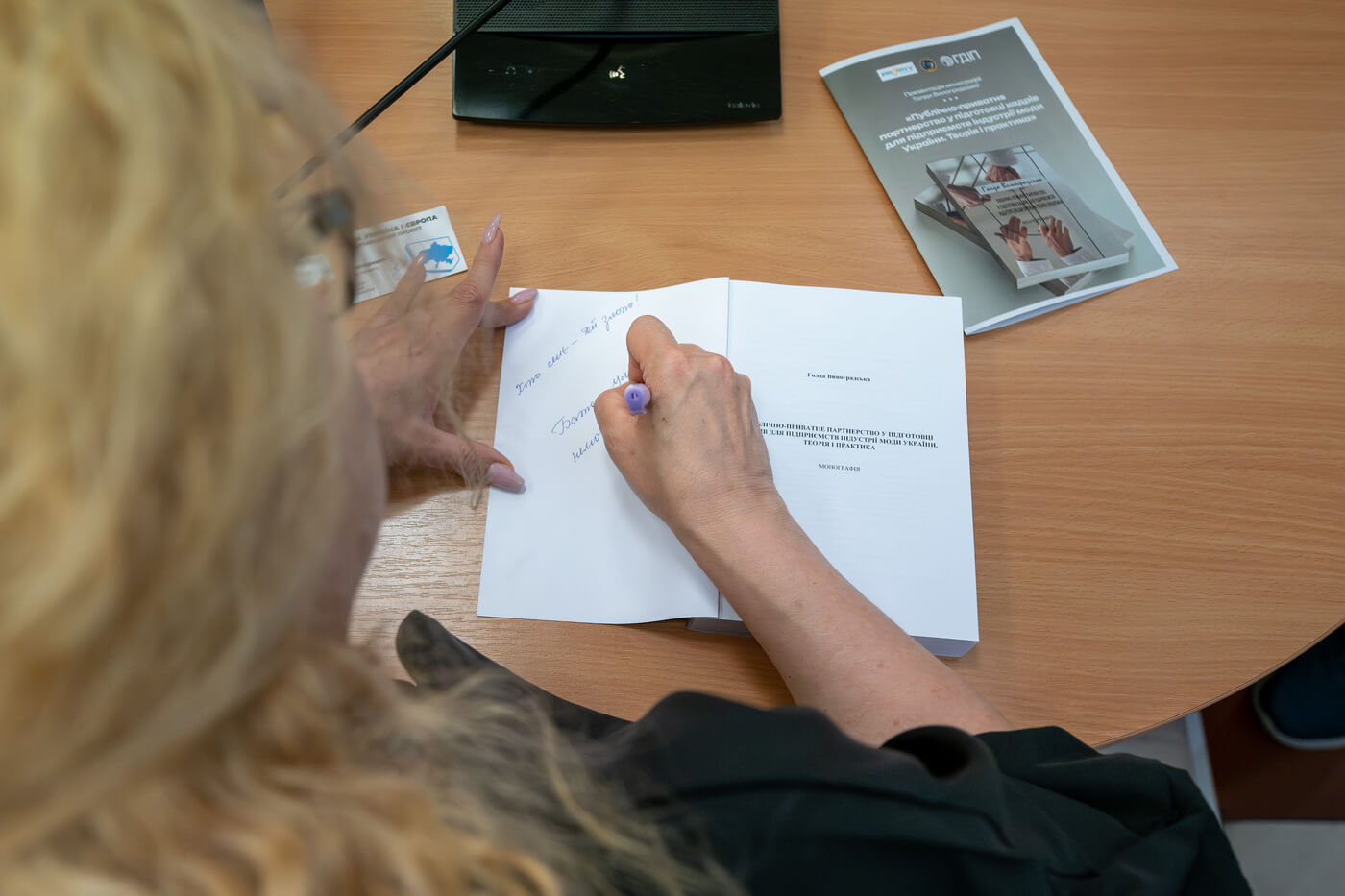
The speaker paid special attention to issues in vocational education and to the interaction among business, the state, and civil society. These very topics became the foundation of her book and academic work. She is convinced that public-private partnership mechanisms help find resources where they are lacking. She also emphasised that the country’s sustainable development is possible only under the condition of cooperation among employers, educators, the public, and the state.
At the same time, the designer emphasised the special role of cultural diplomacy, which she calls the ‘diplomacy of the caring’. “I would very much like this term — ‘diplomacy of the caring’ — to catch on as well, because Ukraine has, first and foremost, an amazing capital of these caring people who need to be guided and united as effectively as possible for the sake of the state’s development,” noted Golda Vynohradska.
For his part, Ukrainian diplomat Oleksandr Danyleiko emphasised the significant role of the Ukrainian diaspora in promoting Ukrainian interests and a positive image of Ukraine abroad. He specifically highlighted the need to maintain contact with both the established diaspora and the new wave of Ukrainians who left after the start of the full-scale war. According to the speaker, cultural and artistic projects help unite the community and strengthen its connection with Ukraine. ‘A significant challenge is not to let the diaspora drift away from Ukraine and not to let the new wave of Ukrainians dissolve into the societies of other countries,’ noted Oleksandr Danyleiko.
Diplomats, public figures, members of the diaspora, and university students joined the active discussion.
After the event concluded, informal networking took place, during which participants exchanged their thoughts and impressions.