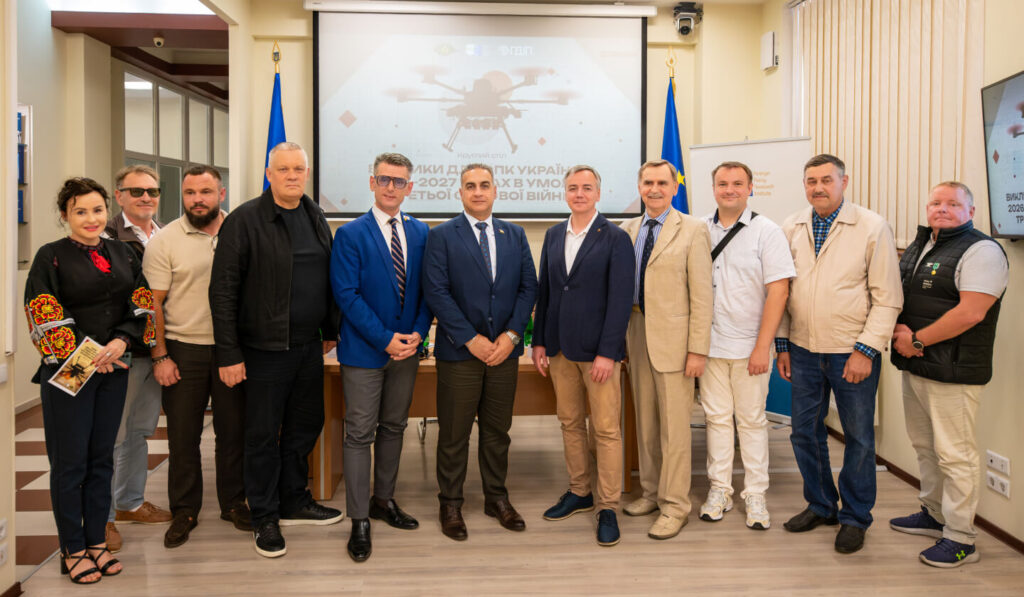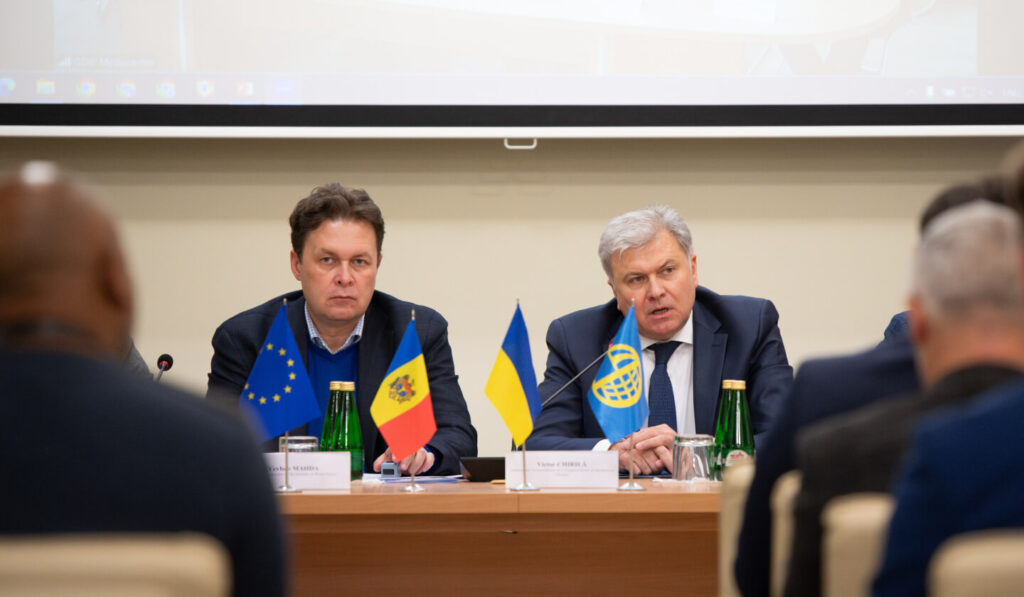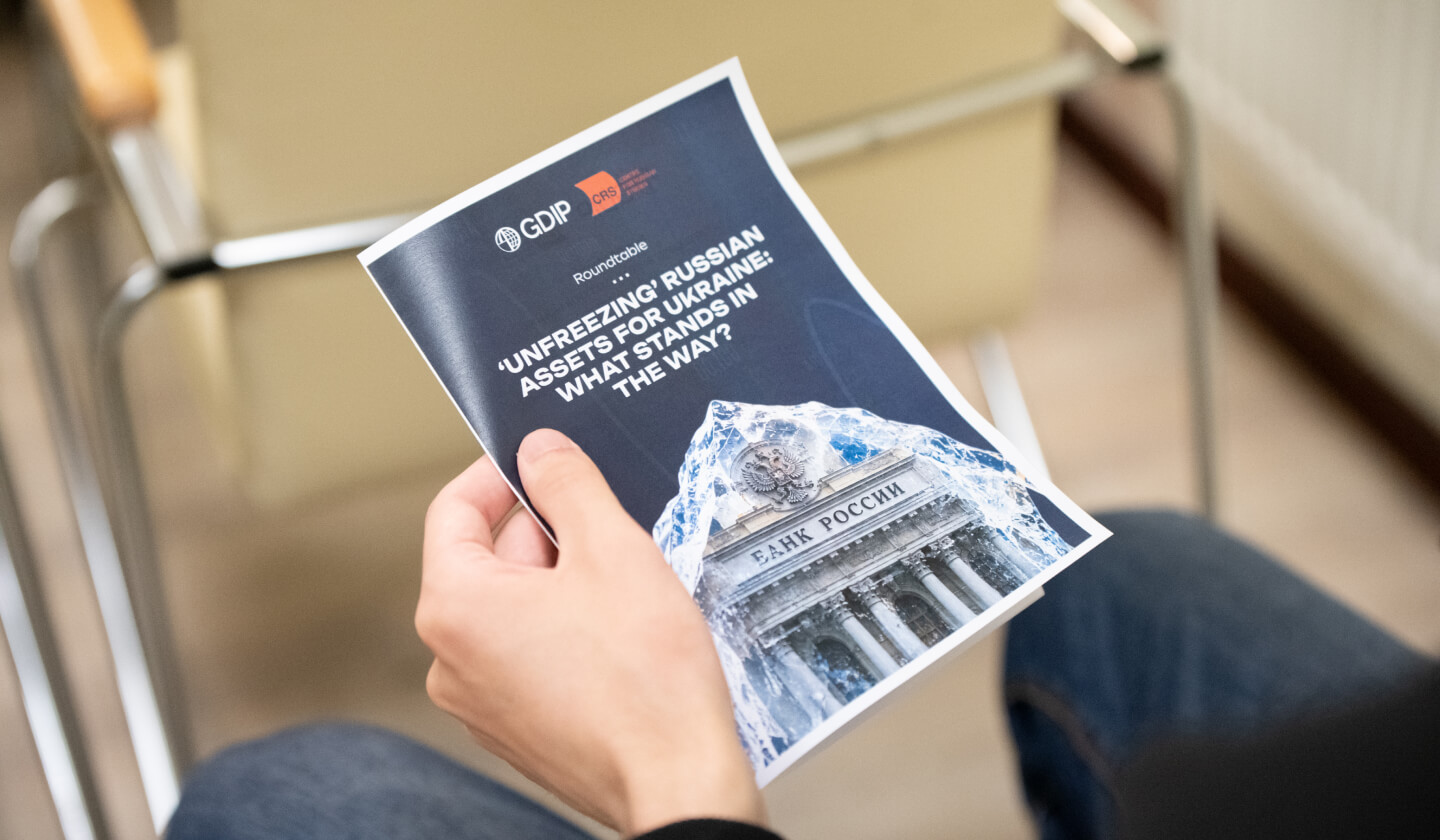
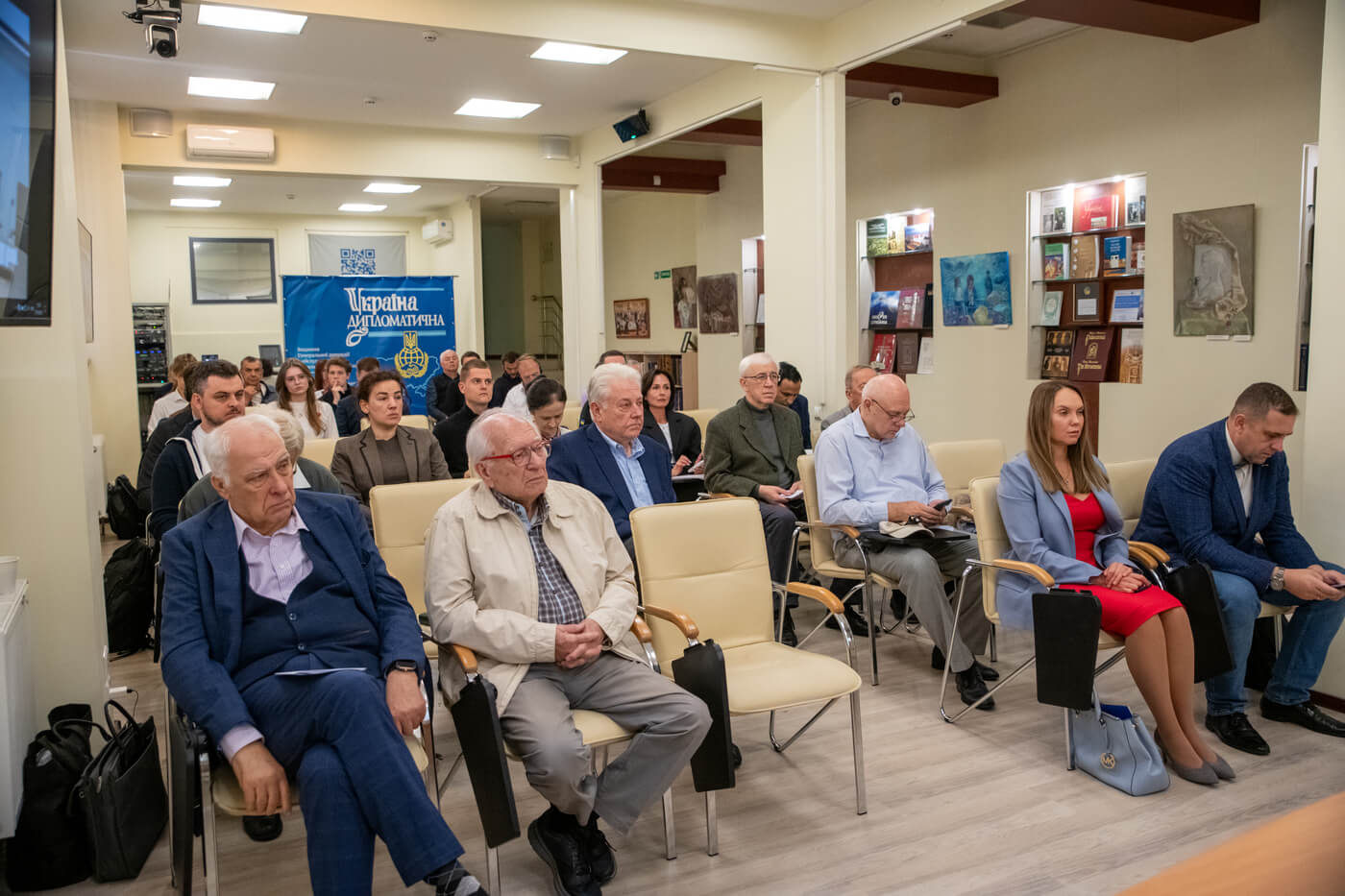
On Thursday, 1 October 2026, the GDIP Media Center hosted a roundtable discussion entitled ‘Unfreezing’ russian Assets for Ukraine: What Stands in the Way?. The event was organized by the Centre for russian Studies, supported by the Directorate-General for Rendering Services to Diplomatic Missions.
The event featured guests from the foreign and Ukrainian diplomatic corps, Ukrainian media, universities, and expert circles.
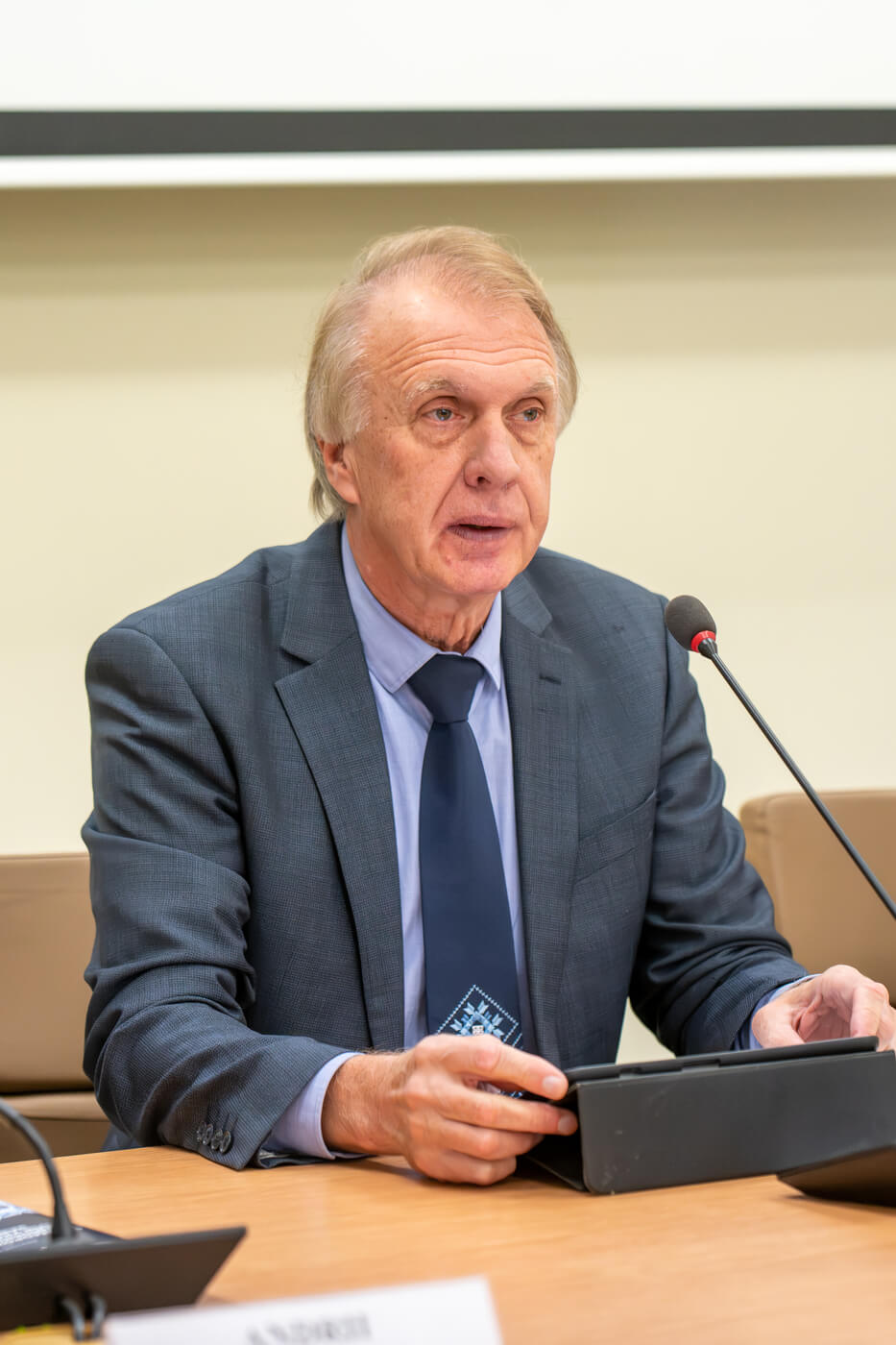
The event was moderated by Volodymyr Ohryzko — minister for foreign affairs of Ukraine (2007–9), Ambassador Extraordinary and Plenipotentiary, and head of the Centre for russian Studies. In his opening remarks, Mr Ohryzko focused on the practical dimension of the issue of frozen russian assets and their potential use in financial support for Ukraine and stressed the significant shortfall of funds in Ukraine’s state and military budget, while highlighting the approximate 250 billion euros in russian assets that remain ‘frozen’ in Europe. Volodymyr Ohryzko also outlined the fundamental provisions of a draft position paper: recognition of the crime of aggression and financial responsibility therefor, use of frozen russian assets as part of this responsibility, legal guarantees for the European Union and establishment of a financial incentive for it to use the assets in such a way. ‘Committing a crime must incur responsibility, including financial liability’, said the moderator, encouraging the participants to focus on concrete mechanisms and proposals.
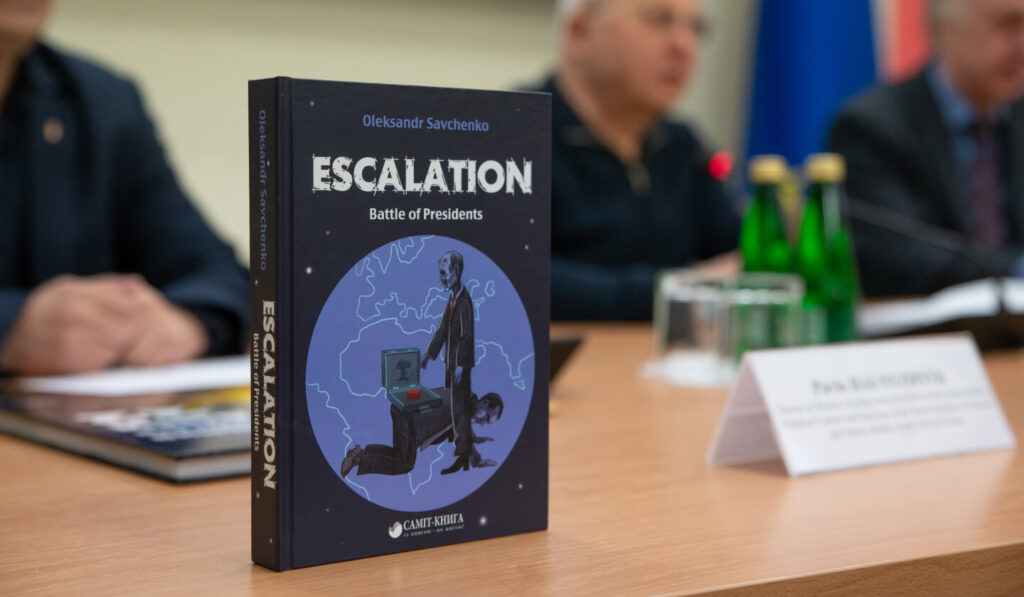
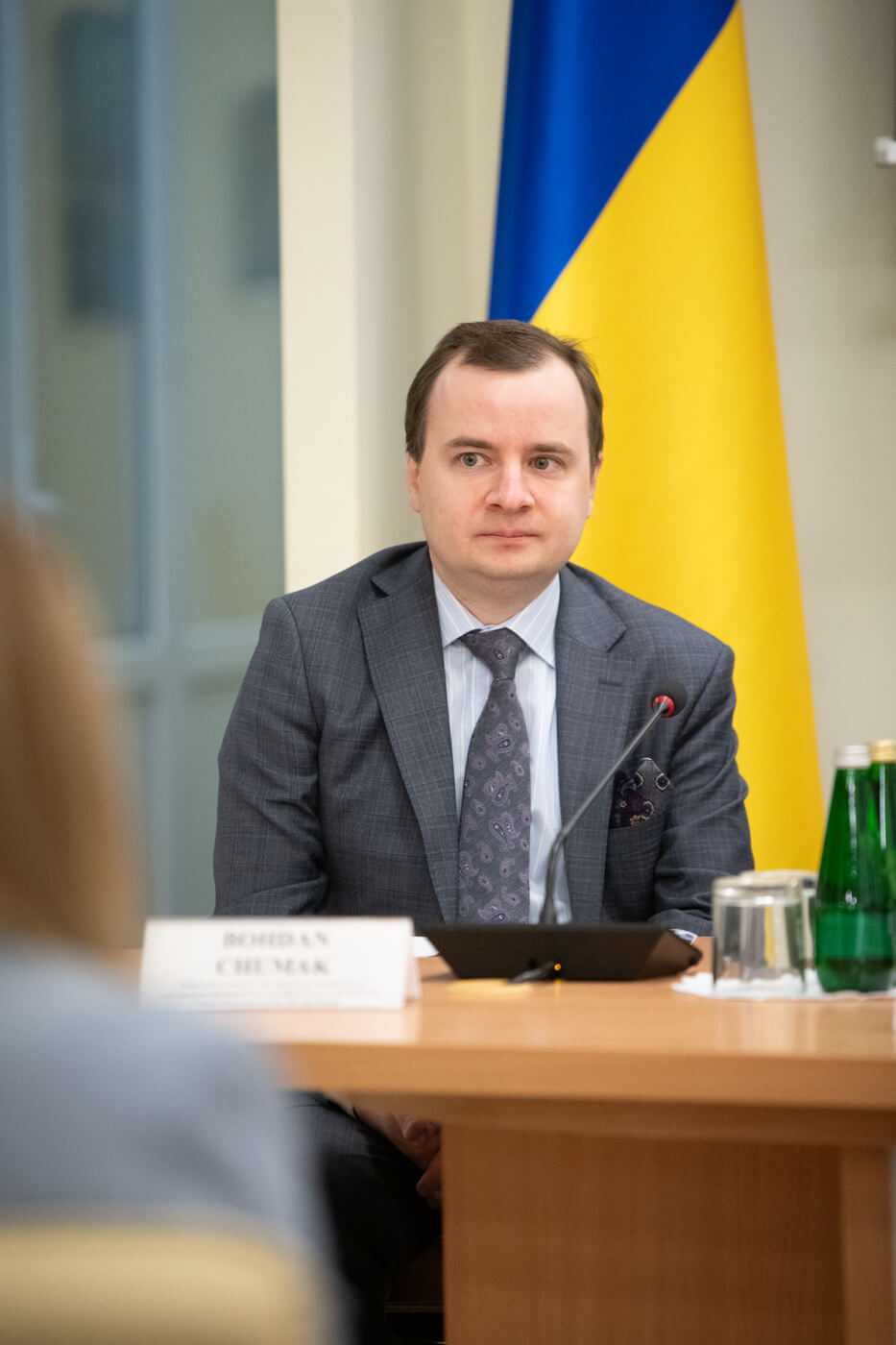
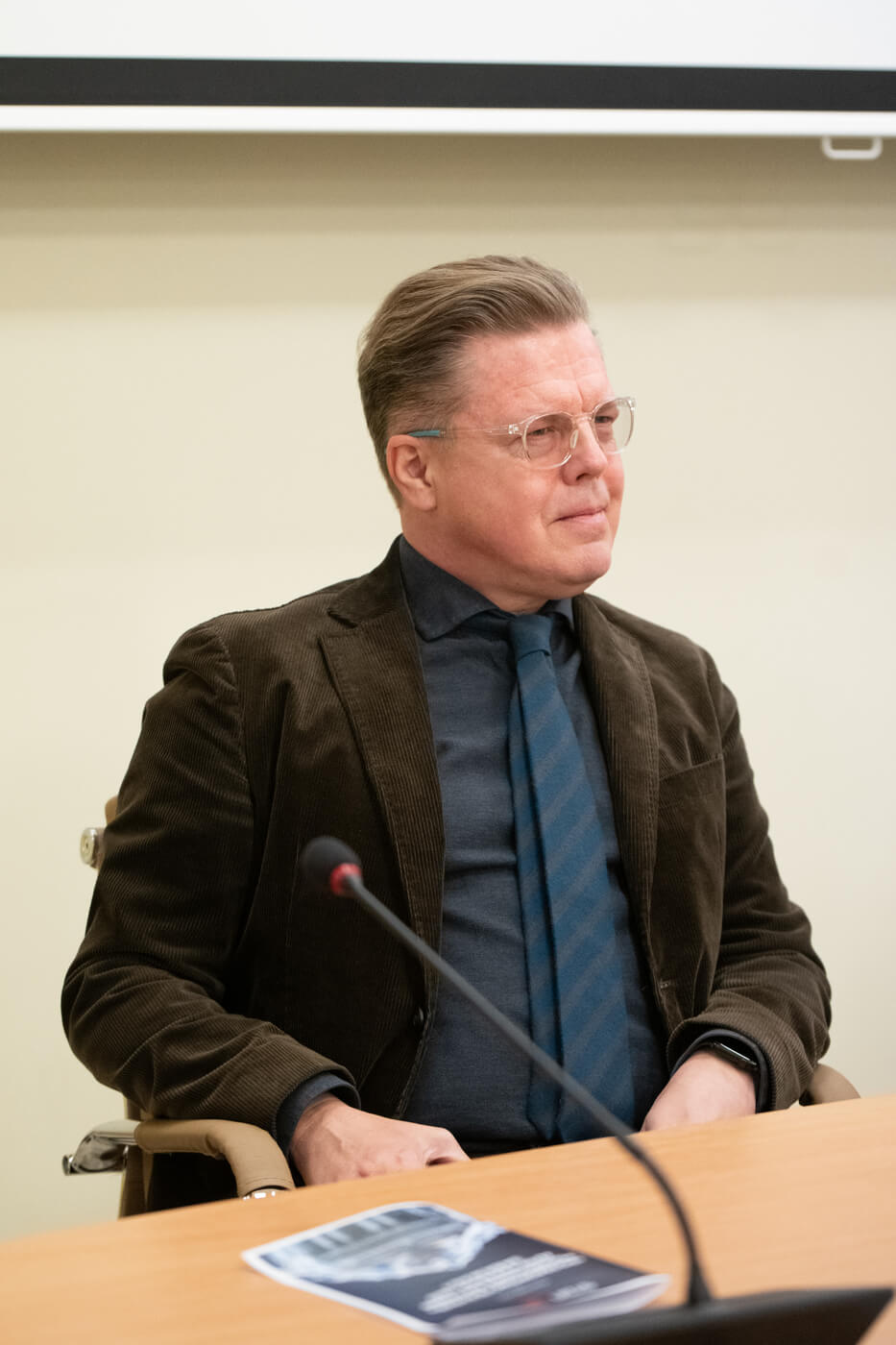
The roundtable discussion’s lineup of speakers included Andrii Osadchuk — member of Ukrainian parliament, first deputy head of the Verkhovna Rada Committee for Law Enforcement; Maksym Baryshnikov — lawyer, co-founder of the initiative group for expelling russia from the UN, head of international legal projects and strategic research at the Pylyp Orlyk Foundation; Anatolii Dovhert — professor, lecturer at the Private International Law Chair of the Educational and Scientific Institute of International Relations of the Taras Shevchenko National University of Kyiv; Oleksandr Merezhko — doctor of law, professor, head of the Verkhovna Rada Committee on Foreign Policy and Interparliamentary Cooperation; Oleksandr Motsyk — Ambassador Extraordinary and Plenipotentiary, first deputy minister for foreign affairs of Ukraine for European integration (2004–2005); Oleksandr Savchenko — professor, rector of the International Institute of Business; Bohdan Chumak — head of the Section for the Analysis and Monitoring of the Sanctions Implementation and Effectiveness at the Sanctions Policy Department of the Ministry of Foreign Affairs of Ukraine.
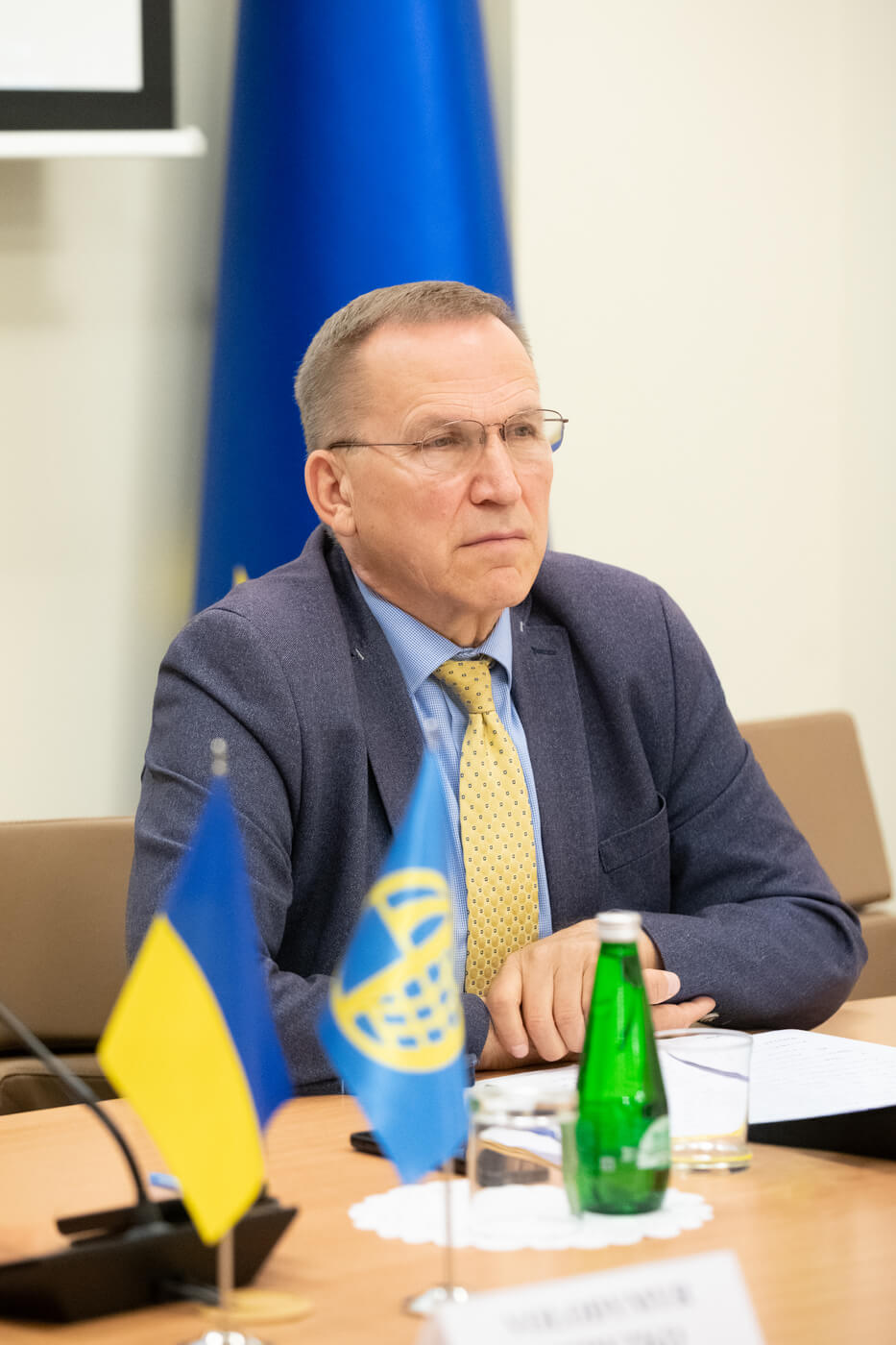
The event provided an opportunity to discuss a set of important questions: whether sovereign assets are an untouchable ‘sacred cow’; whether responsibility for the crime of aggression is an international law imperative; whether compensation for damage remains a mere theory; whether national egoism or European solidarity will win; whether Ukraine should wait or take action; whether it’s time to give away russian property abroad; as well as how to make confiscating russian assets economically advantageous for the European Union.
Andrii Osadchuk — member of Ukrainian parliament, first deputy head of the Verkhovna Rada Committee for Law Enforcement — spoke about Ukraine’s longstanding efforts to ensure the frozen russian assets are used to compensate for the damages caused by the war, but pointed out that a direct transfer of these assets to Ukraine remains unlikely. On the other hand, Mr Osadchuk called for a focus on expanding the reparations loan mechanism, citing Ukraine’s acute needs for war funding and the importance of a unified stand at the international level. ‘It does not matter in the slightest what that money will be referred to as; we do, however, absolutely need a unified strategy’, said the speaker, highlighting the need to have a unified state policy and coordinated communications regarding russian assets.
Oleksandr Motsyk — Ambassador Extraordinary and Plenipotentiary, first deputy minister for foreign affairs of Ukraine for European integration (2004–2005) — underlined the scale and severity of russia’s international crimes, adding that in light of russia’s obstructing the work of the UN Security Council, the international community must look for alternative mechanisms to hold the aggressor accountable. Among the existing options, the expert listed the direct transfer of frozen assets to Ukraine, the reparations loan mechanism, and the transfer of assets from the Belgian Euroclear to the European Union, with further oversight of their use. According to Oleksandr Motsyk, legal mechanisms for such a solution can be found, assuming there’s political will, as the scale of russia’s crimes provides grounds for countermeasures. ‘In this situation, we have a right to demand, as one of the aspects of punishing the aggressor, that all these funds be channelled towards helping Ukraine’, said the speaker, calling upon Ukraine to be more active at all levels — government, parliament, public, and expert — and take a united stand on the use of russian assets.
Bohdan Chumak — head of the Section for the Analysis and Monitoring of the Sanctions Implementation and Effectiveness at the Sanctions Policy Department of the Ministry of Foreign Affairs of Ukraine — stressed that Ukraine’s main task is to make sure that the ‘immobilized’ russian assets are channelled towards funding defence, given Ukraine’s acute shortage of money. The expert called upon European partners not to give in to russia’s pressure and pointed to the need for a just risk sharing among EU countries. ‘The “immobilized” russian sovereign assets will work for Ukraine’s defence, which is tantamount to the European Union’s defence’, — summed up Bohdan Chumak.
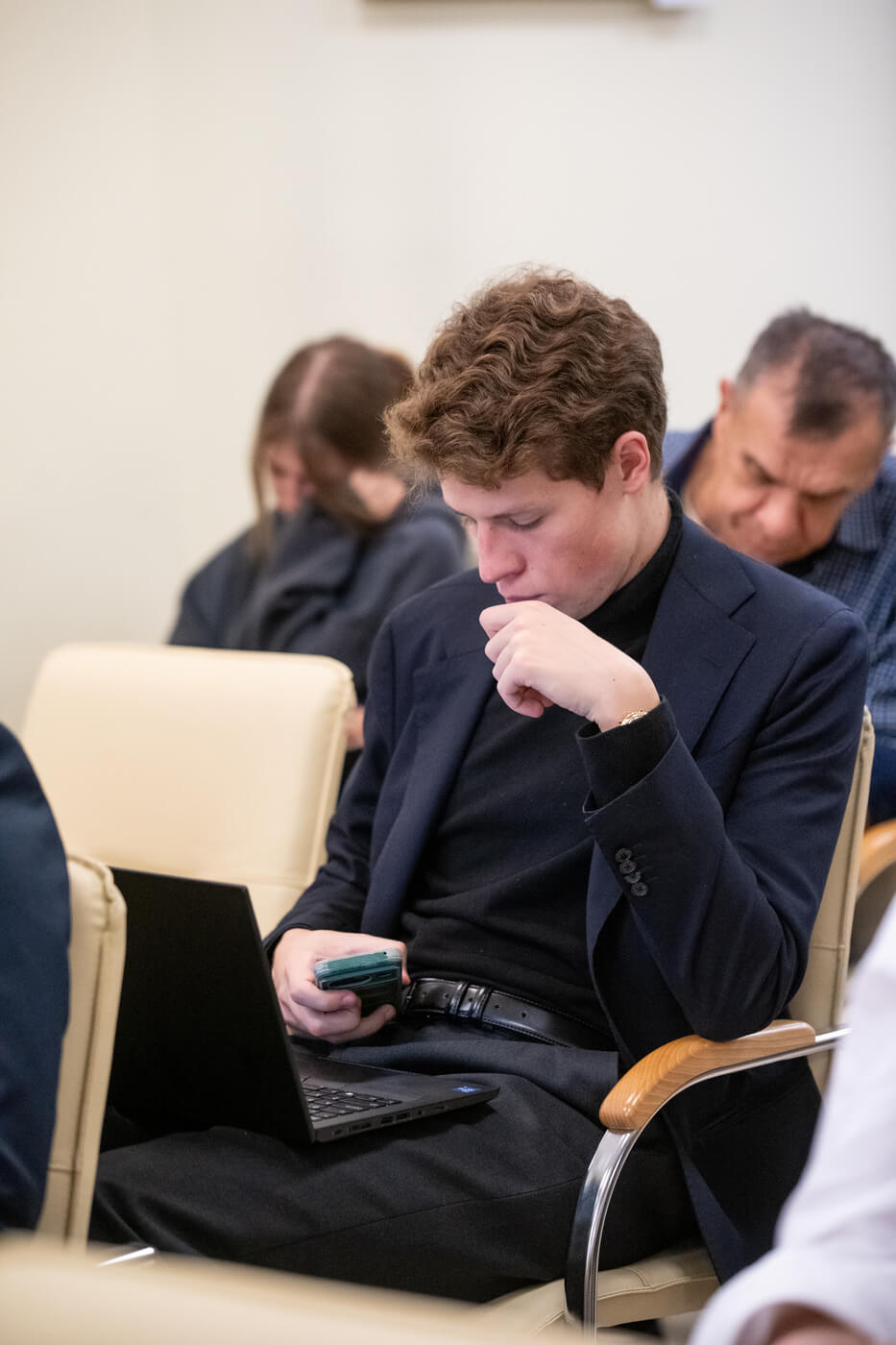

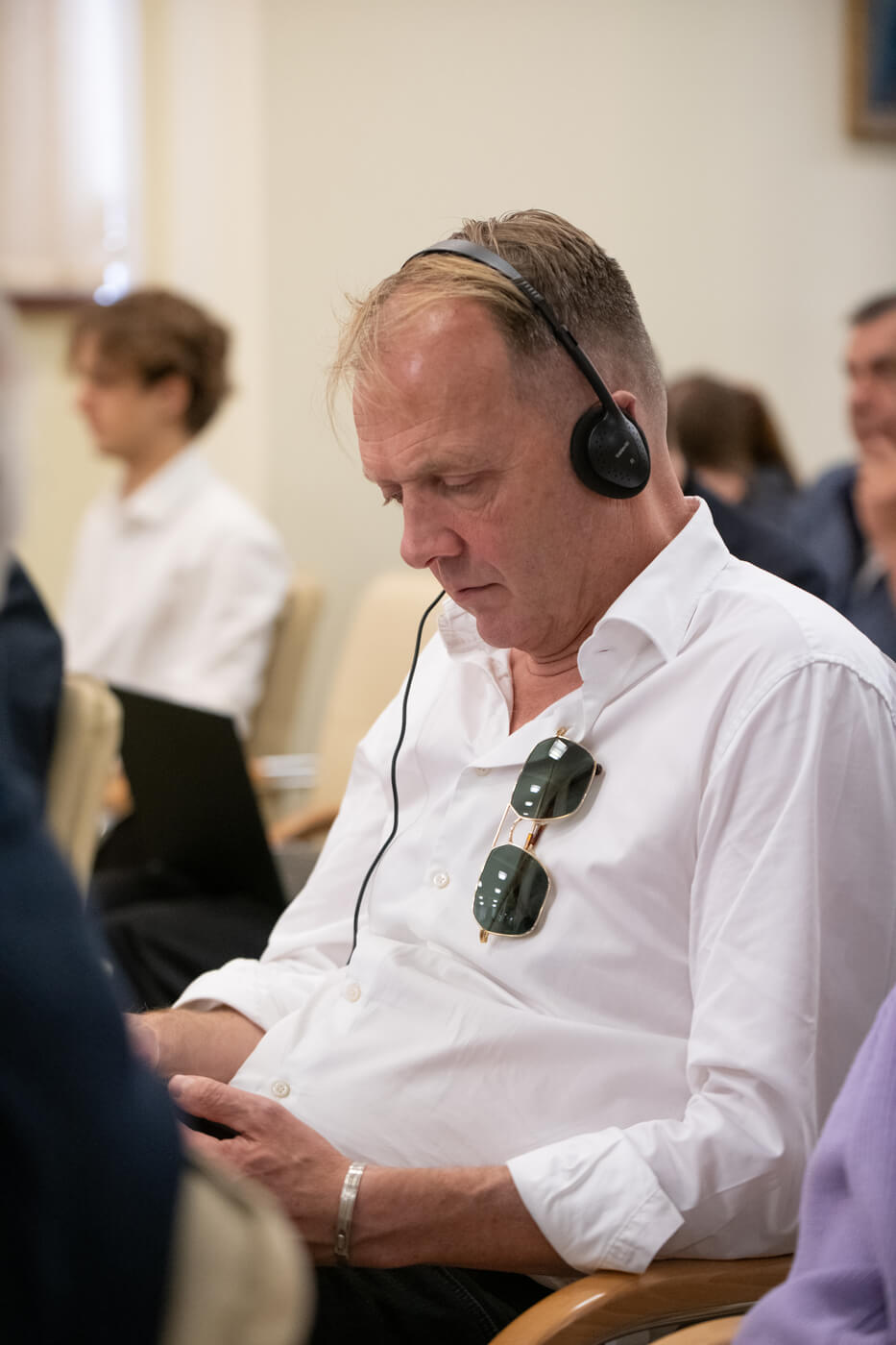
The speakers’ reports were followed by a lively discussion with the guests and online participants.
The recording of the event is available for viewing at https://www.youtube.com/watch?v=P6lFCjAztw0