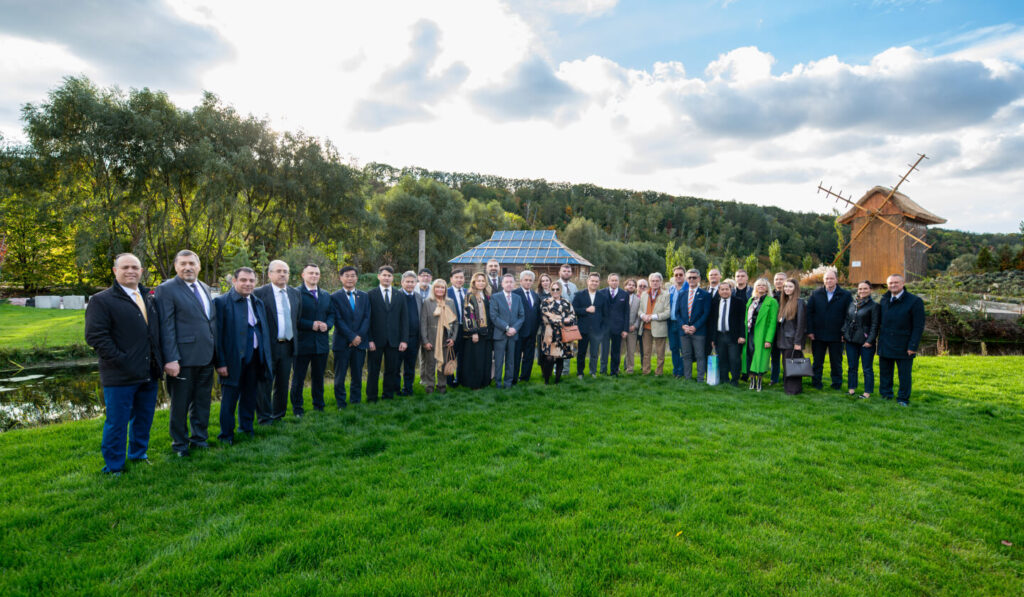
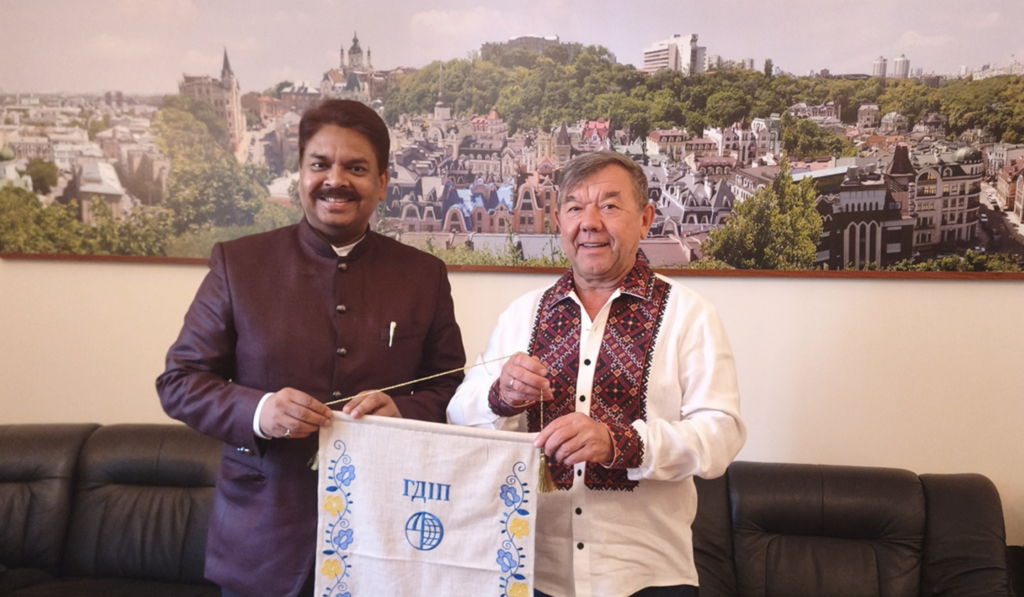
On Thursday, 24 September 2026, a delegation of Ukrainian and foreign diplomats arrived at the National University of Ostroh Academy to participate in the Sixth International Diplomatic Forum.
The forum has become a valued tradition and an important platform for professional dialogue, discussion of current transformational challenges, and exchange of views on shaping a new generation of diplomacy.
This year’s event marked the 450th anniversary of the university’s foundation. As in previous years, the forum was jointly organized by the State Enterprise ‘Directorate-General for Rendering Services to Diplomatic Missions’ (GDIP) and the National University of Ostroh Academy.
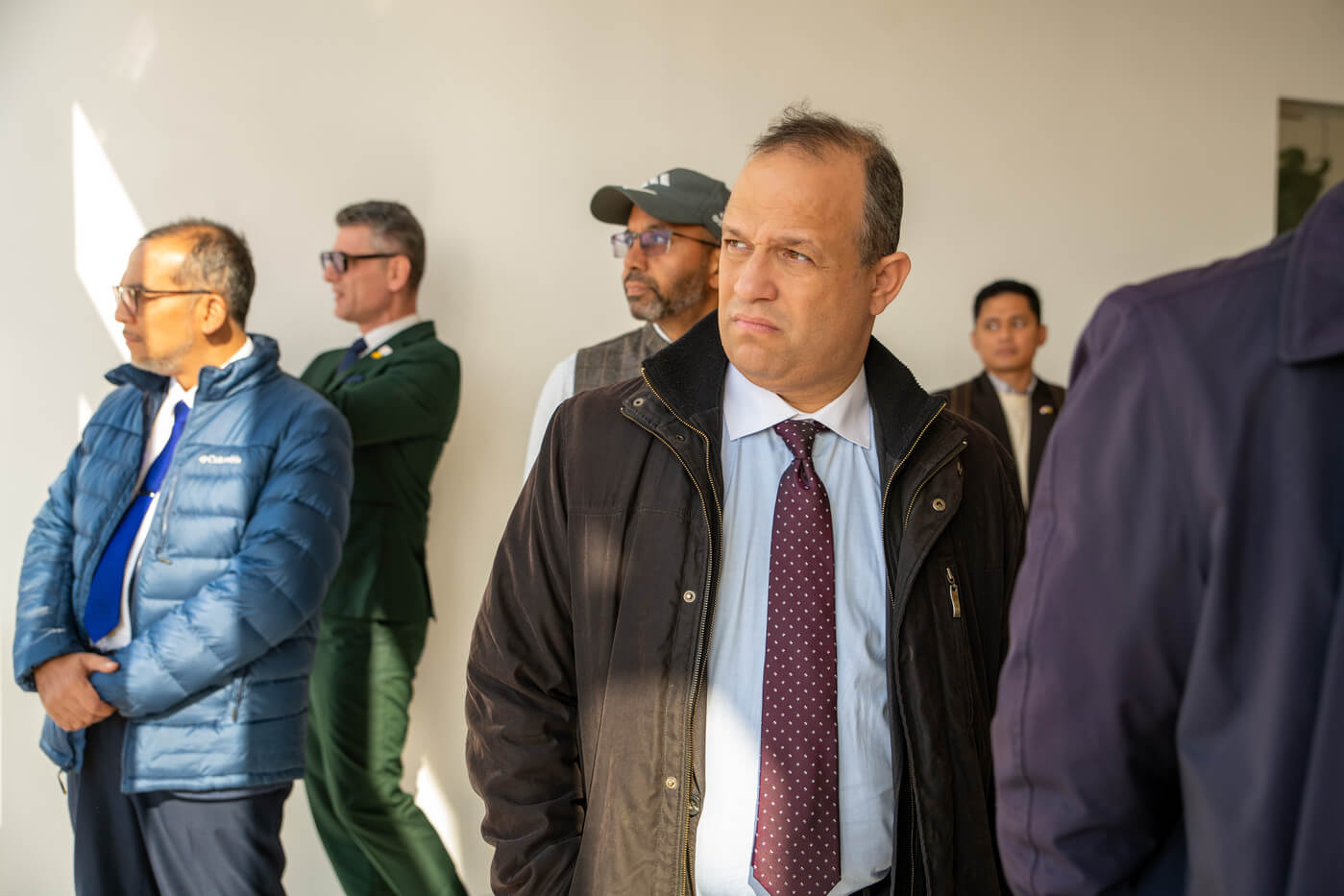
The delegation included representatives of diplomatic missions from 16 countries, including ten Ambassadors Extraordinary and Plenipotentiary from Ukraine and abroad. Among them were the serving heads of the diplomatic missions of Austria, Egypt, Indonesia, Ireland, Kyrgyzstan, and Pakistan, as well as Ukrainian ambassadors with many years of diplomatic service in Austria, Canada, Italy, Lebanon, and Norway. They were joined by representatives of the diplomatic missions of Croatia, Cyprus, the Democratic Republic of the Congo, India, Kazakhstan, Lithuania, Poland, Senegal, the Sovereign Order of Malta, and Vietnam. Also participating were representatives of leading Ukrainian higher education institutions: the Open International University of Human Development ‘Ukraine’, Ihor Sikorskyi Kyiv Polytechnic Institute, Borys Hrinchenko Kyiv Metropolitan University, Taras Shevchenko National University of Kyiv, and Drahomanov Ukrainian State University.
Upon arrival, the diplomatic delegation was welcomed by performers portraying Halshka and Kostiantyn of Ostroh in period costume. Their greeting helped the guests experience the spirit of the age and appreciate the grandeur of the academy founders’ historical legacy. Eduard Balashov, rector of the National University of Ostroh Academy, also welcomed the guests.
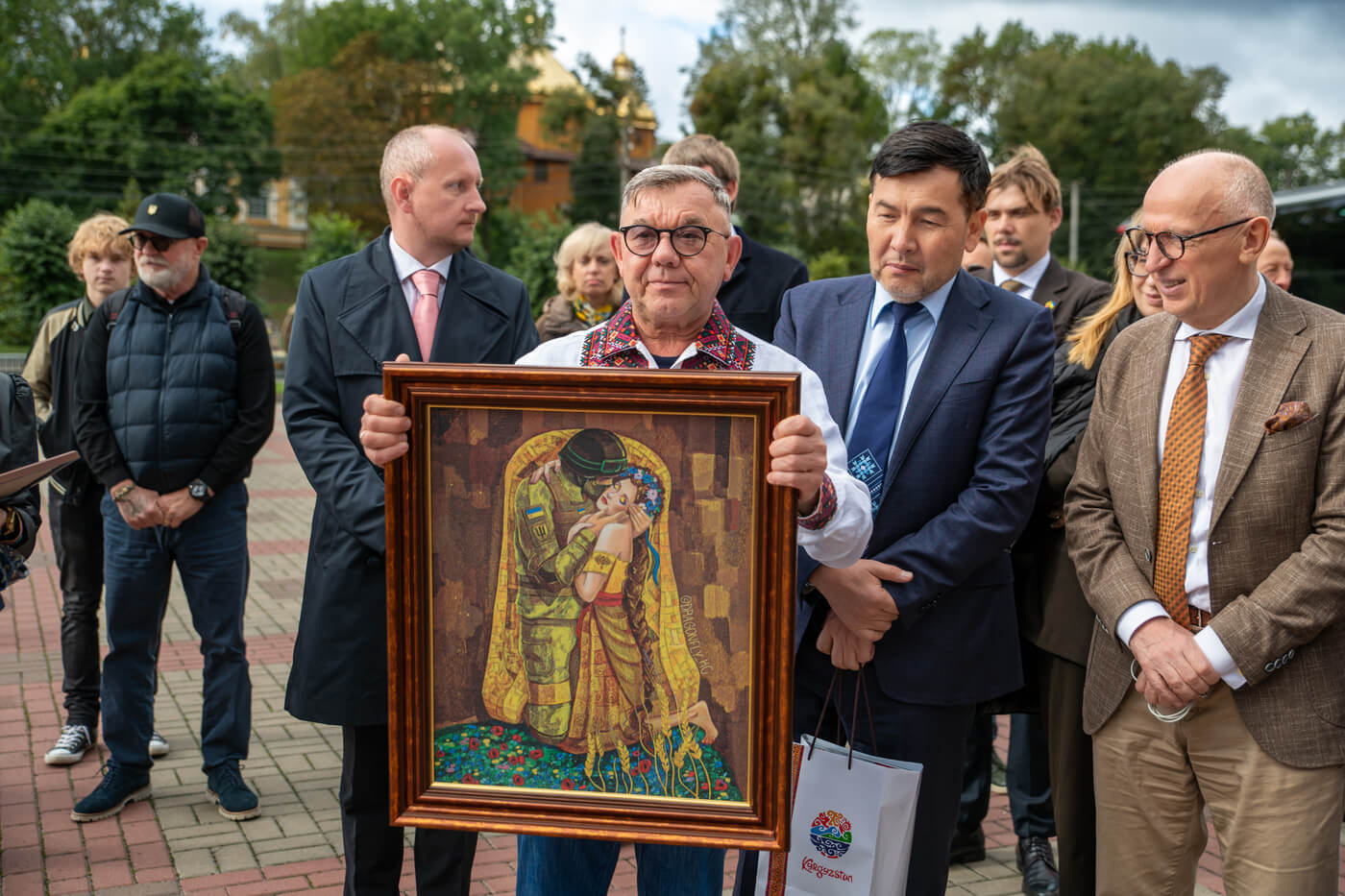
On behalf of the foreign delegation, Pavlo Kryvonos, GDIP director-general, presented a special gift: In Safe Arms, a 2022 painting by Ukrainian artist and illustrator Solomiia Kovalchuk, together with a tie bearing the slogan ‘Glory to Ukraine! Glory to the Heroes!’ and the GDIP logo.
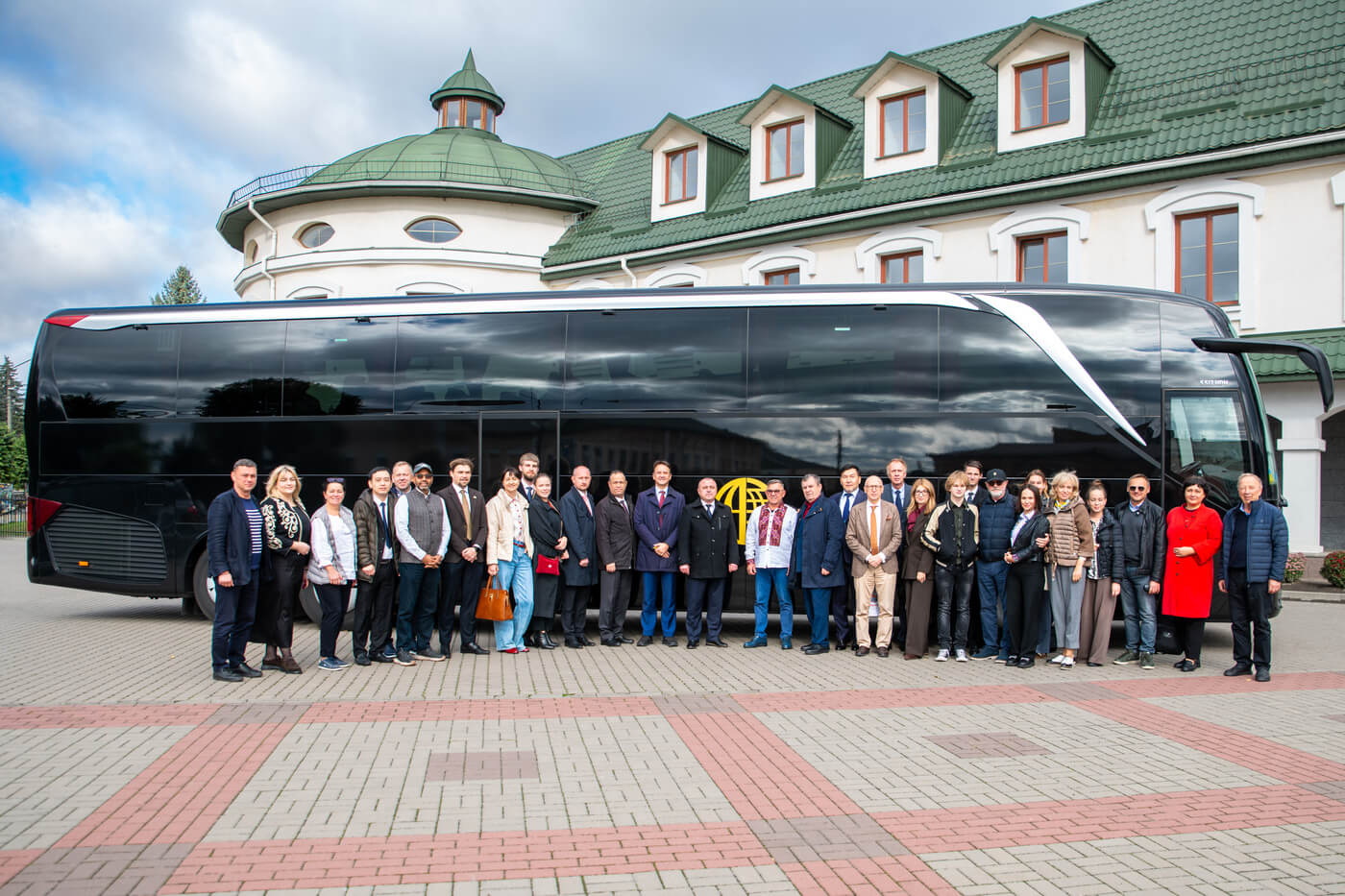


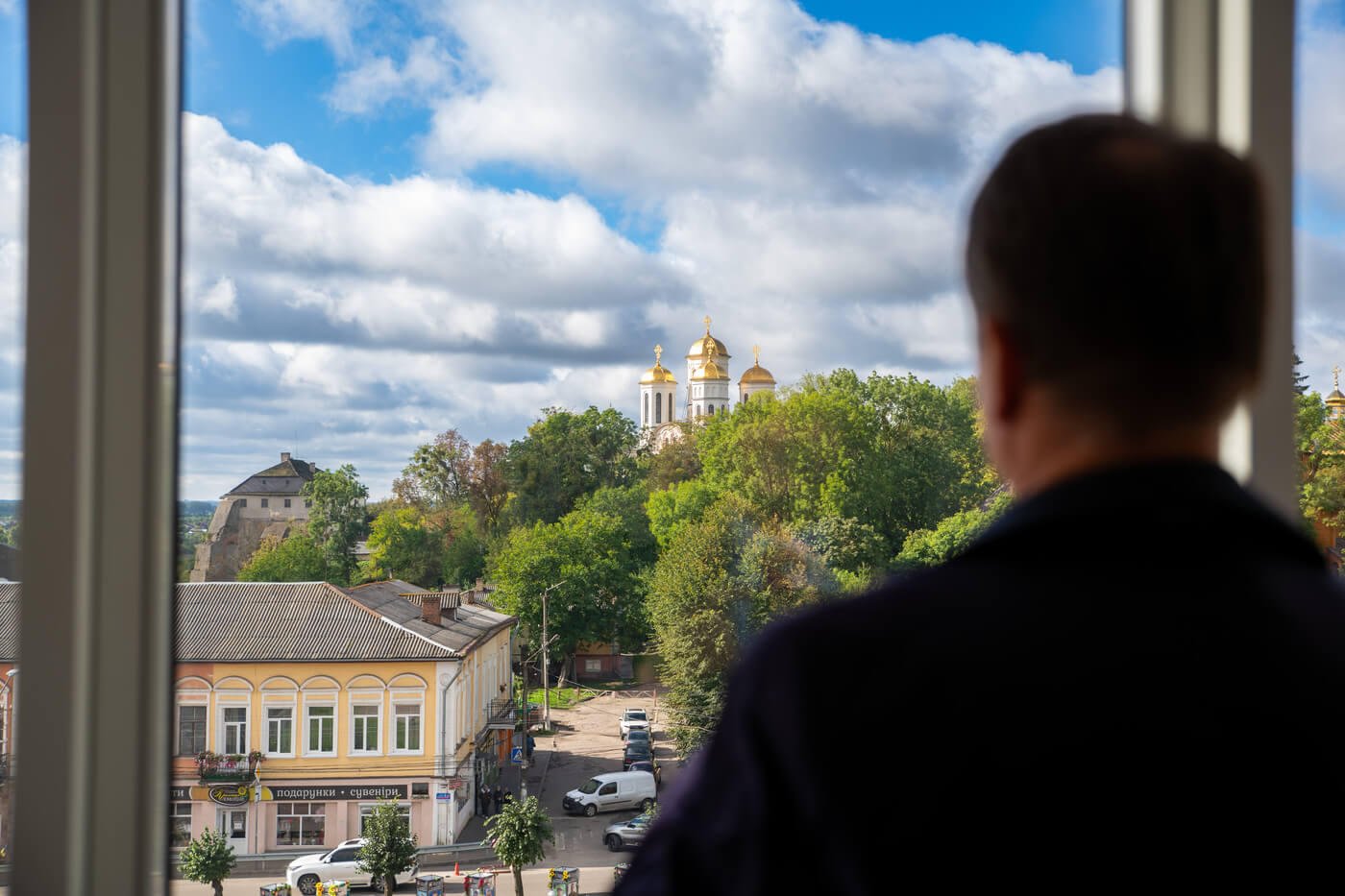
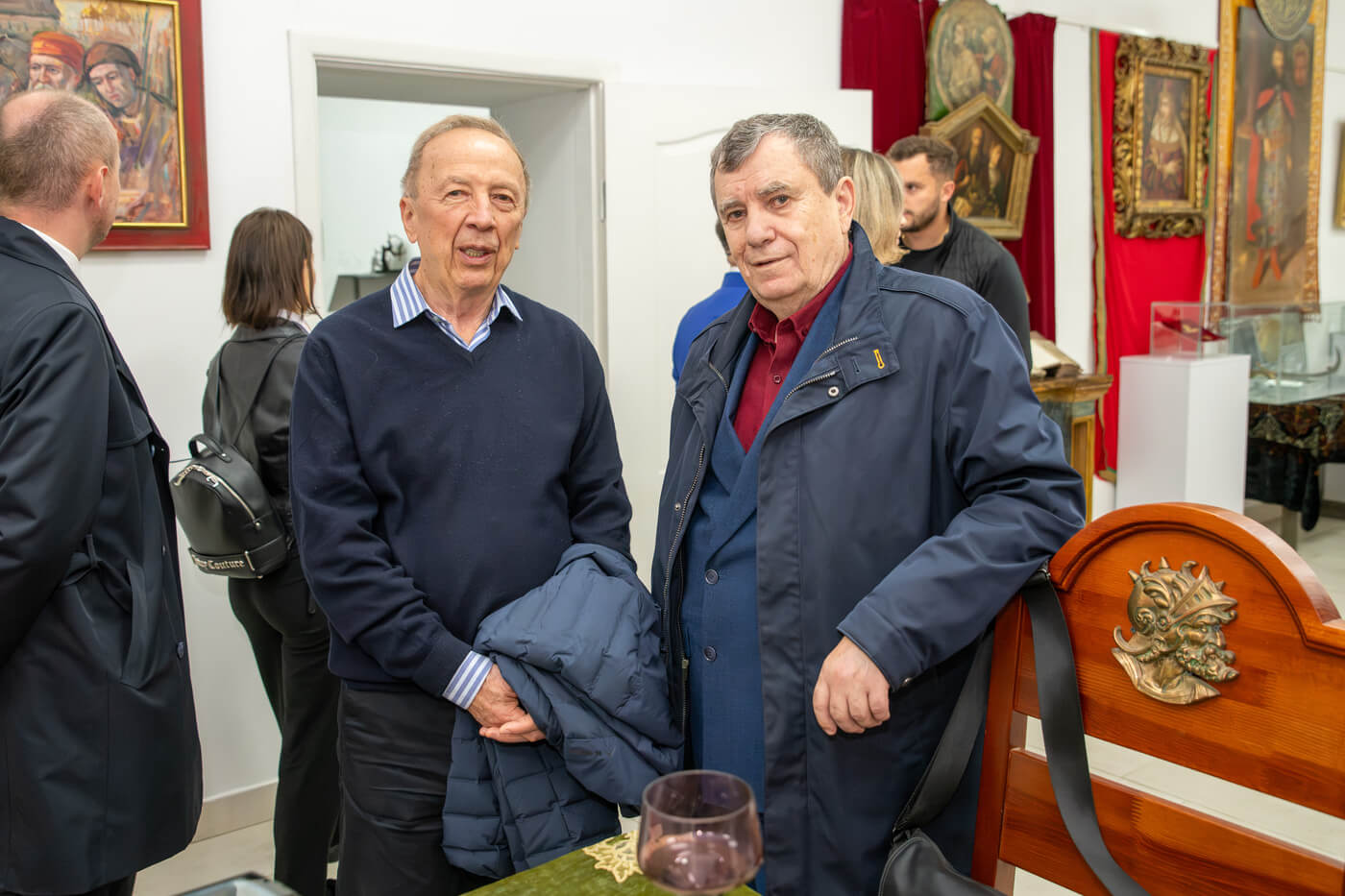
As part of the event, the foreign guests learned about the history of the National University of Ostroh Academy, its life today, and its educational and cultural initiatives. During the tour programme, the diplomats visited the Art Cluster and the Prostir SLOVA exhibition, viewed the modern facilities in the New Academic Building, and explored the Old Monastery Building. Particular attention was paid to the university’s modern infrastructure, especially its innovative laboratories, where the guests were introduced to the academy’s educational and research capabilities.


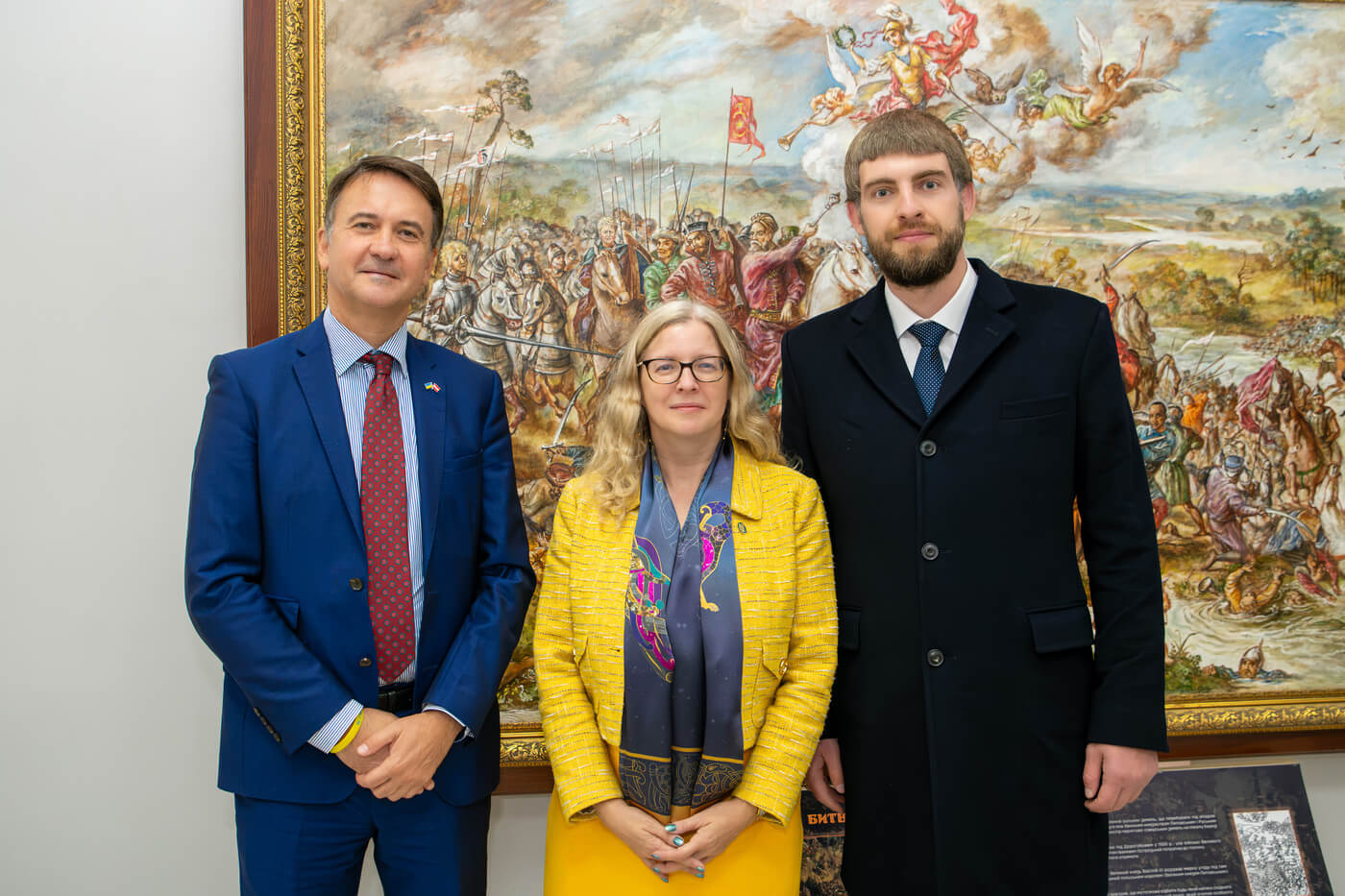


After the foreign delegation had learned about the academy’s history and viewed its facilities, the Sixth International Diplomatic Forum began. The event brought together representatives of government bodies, foreign diplomatic missions, international organizations, and higher education institutions, alongside the university’s academic staff and students.
Welcoming remarks were delivered by Eduard Balashov, rector of the National University of Ostroh Academy; Liudmyla Shatkovska, deputy head of the Rivne Regional Military Administration; Pavlo Kryvonos, GDIP director-general; Volodymyr Ohryzko, Minister for Foreign Affairs of Ukraine (2007–09), Ambassador Extraordinary and Plenipotentiary, head of the Centre for russian Studies; Roman Nedilskyi, first-class Envoy Extraordinary and Plenipotentiary, consul general of Ukraine in Istanbul (2021–26) and concurrently Ukraine’s representative to the Organization of the Black Sea Economic Cooperation (2022–26), director of the Directorate General for Human Resources at the MFA of Ukraine; Ihor Ostash, Ambassador Extraordinary and Plenipotentiary of Ukraine to Canada and permanent representative of Ukraine to the International Civil Aviation Organization (2006–11), Ambassador Extraordinary and Plenipotentiary of Ukraine to Lebanon (2016–22), director of the Hennadii Udovenko Diplomatic Academy of Ukraine at the MFA; and Volodymyr Yevtukh, Ukraine’s Minister of Nationalities and Migration (1995–96), Ambassador Extraordinary and Plenipotentiary of Ukraine to Italy (1997–99), Doctor of History, corresponding member of the National Academy of Sciences of Ukraine, full professor.
Eduard Balashov, rector of the National University of Ostroh Academy, noted that the Sixth Diplomatic Forum has become a valued tradition and an important platform for dialogue among diplomats, public officials, scholars, and students. He added that international education and diplomacy are becoming increasingly interconnected in the 21st century, with the university playing an important role in preparing a new generation of professionals capable of working effectively in an international environment. He also conveyed warm greetings and words of gratitude from Ihor Pasichnyk, the university’s president and founding rector, Doctor of Psychology, full professor, and Hero of Ukraine, who had devoted considerable efforts to developing the academy as a centre for educating future professionals. ‘Ostroh Academy has a long-standing tradition of preparing leaders capable of engaging in public and diplomatic dialogue,’ the rector emphasized, highlighting the continuity of this tradition, which lives on through international partnerships, academic mobility, and direct exchanges of experience with practising diplomats.
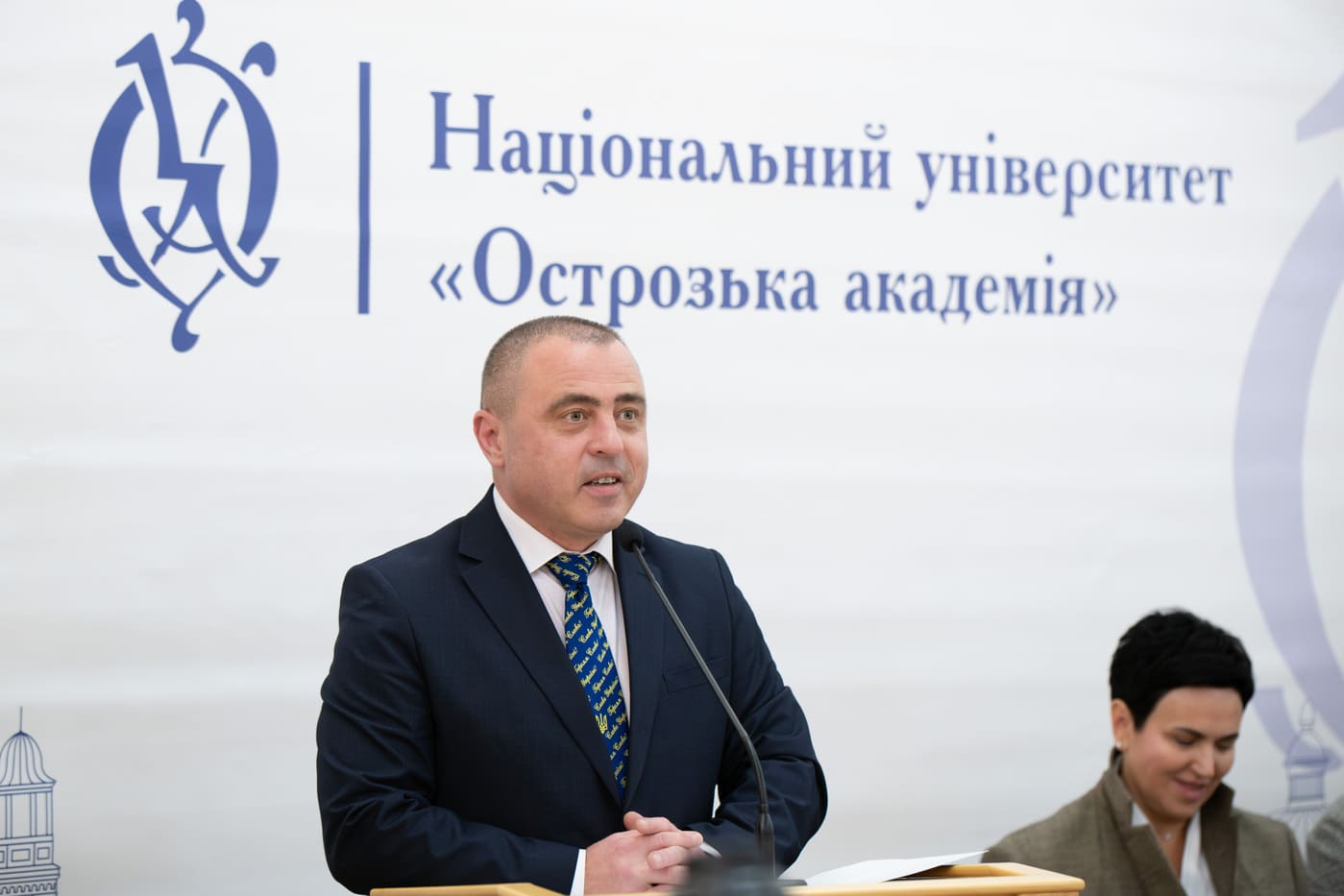

In her address, Liudmyla Shatkovska, deputy head of the Rivne Regional Military Administration, focused on the challenges the war poses to Ukrainian students, particularly in pursuing their education, stressing the importance of maintaining faith in Ukraine and developing professional knowledge and skills even in difficult circumstances. Ms Shatkovska also highlighted the particular value of the forum as an opportunity for students to speak with diplomats and representatives of other countries and to communicate Ukraine’s values and vision to the international community. ‘May you convey to the whole world the faith in our nation and in Ukraine that has filled these walls for 450 years, for Ukrainians are goodness and light,’ she said.
In his welcoming remarks, Pavlo Kryvonos, director-general of the State Enterprise ‘Directorate-General for Rendering Services to Diplomatic Missions’, emphasized the special significance of the long-standing cooperation with the National University of Ostroh Academy, which extends well beyond a formal partnership and seeks to support young people, encourage intercultural dialogue, and prepare a new generation of international relations professionals. ‘It is a great honour for me to take part today in the opening of the Sixth Diplomatic Forum, which has become a valued tradition in our cooperation with the National University of Ostroh Academy. It is symbolic that we are meeting not only to exchange views on today’s turbulent world but also to work steadily towards preparing a new generation of diplomats, civil servants, and international relations specialists. For more than 30 years, our enterprise has fulfilled its mission of creating a comfortable working environment for foreign diplomats in Ukraine. But our work extends beyond operational responsibilities: we actively invest in intellectual development, encourage intercultural dialogue, and support young people. We consider this work vitally important. For us, Ostroh Academy is a centre of wisdom, traditions of statehood, and contemporary scholarly thought. Thanks to our long-standing cooperation, students from the academy have been undertaking internships at GDIP for more than six years and subsequently becoming part of our professional family. Today, Ostroh Academy graduates work in various GDIP departments, develop professionally, and contribute to our shared work. This is a clear example of how genuine partnership yields lasting results and extends beyond a formal agreement,’ Pavlo Kryvonos noted.
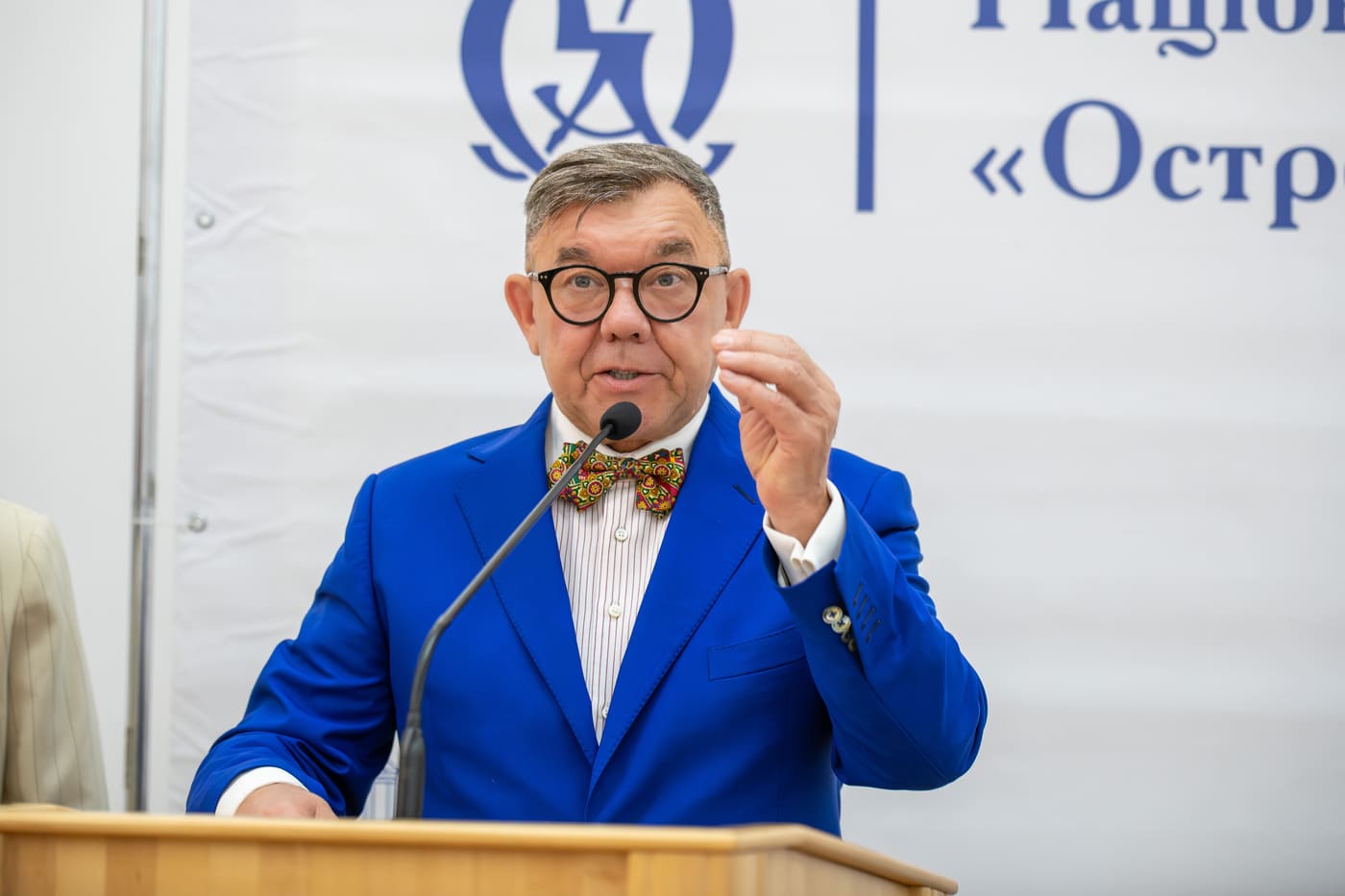

Addressing the students, Volodymyr Ohryzko, Minister for Foreign Affairs of Ukraine (2007–09), stressed the importance of knowing one’s own history and understanding the historical continuity of Ukrainian statehood, which enables them to act with confidence even in the most difficult circumstances. Mr Ohryzko drew attention to Hennadii Udovenko’s formula for a Ukrainian diplomat: professionalism, probity, and patriotism. He emphasized that sound knowledge and professional competence were essential to serving one’s country, while integrity and commitment to Ukraine were equally important. The diplomat also highlighted Ukraine’s ability to concentrate its efforts and find solutions in wartime, citing its experience in countering drones. ‘Become true individuals, become people others will follow — this is within your power,’ he urged the younger generation, encouraging them to look beyond obtaining an education and stressing their responsibility for the country’s future.
‘You do not have to be an ambassador to represent your country. You need to love your state — and that alone is enough to make it known to the world,’ emphasized Roman Nedilskyi, director of the Directorate General for Human Resources at the Ministry of Foreign Affairs of Ukraine. He added that students’ professional knowledge could be valuable not only in diplomacy but also in other areas of public service, and that every citizen could represent Ukraine on the world stage. Mr Nedilskyi also stressed the importance of bringing young professionals into the Ministry of Foreign Affairs, where their energy, fresh ideas, and unconventional thinking should complement the institution’s professional experience and institutional memory.
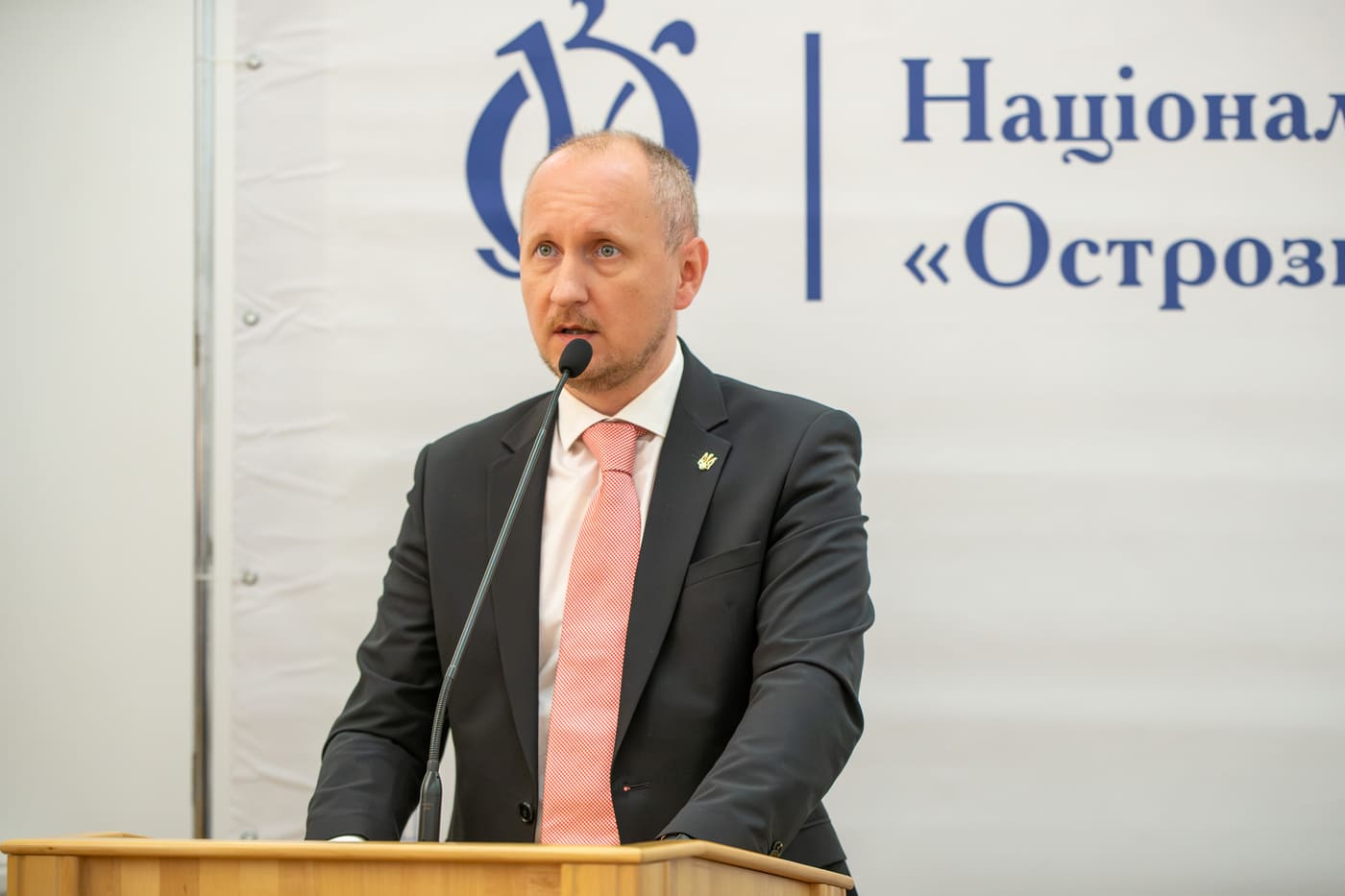
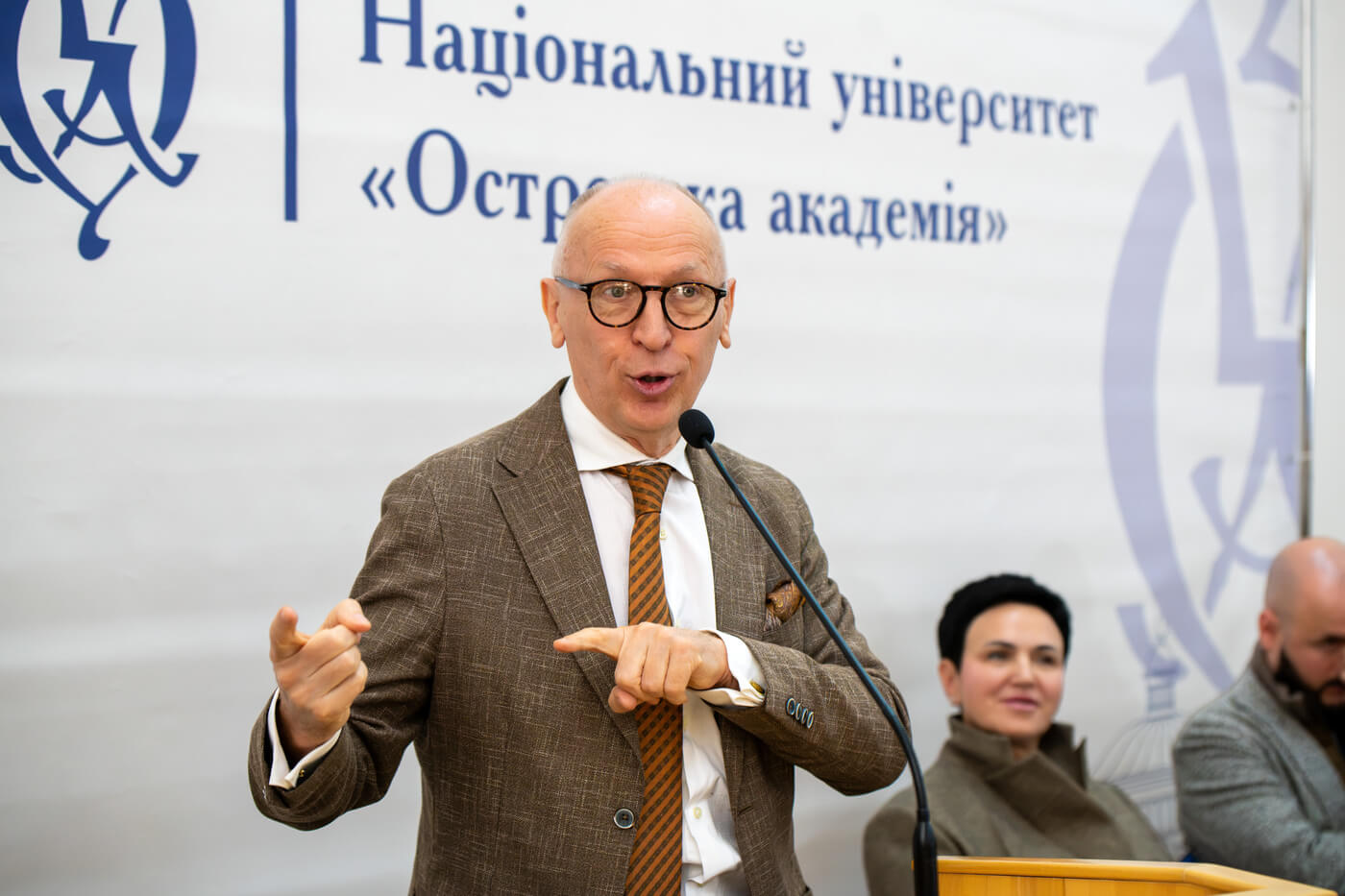
Ihor Ostash highlighted the important role of Ukrainian diplomacy during the war in securing support for Ukraine, building strong coalitions, and opening up new areas of diplomatic engagement. He emphasized the need to strengthen the diplomatic service by recruiting young professionals and to develop cooperation between the Diplomatic Academy and higher education institutions. Mr Ostash also thanked educators for their work during the war and expressed confidence in Ukraine’s resilience: ‘Despite everything, we are strong, powerful, and unbreakable. And we will prevail.’
Volodymyr Yevtukh, Ukraine’s Minister of Nationalities and Migration (1995–96), Ambassador Extraordinary and Plenipotentiary of Ukraine to Italy (1997–99), Doctor of History, corresponding member of the National Academy of Sciences of Ukraine, full professor, emphasized the important role of educational diplomacy. In particular, he highlighted the need to attract international students to Ukrainian universities to exchange experience and develop international ties: ‘We must make an effort to ensure that diplomacy plays a very important role in education and that this exchange goes both ways.’
Foreign diplomats also addressed the students of Ostroh Academy.
In her address, Orla Caitriona McBreen, Ambassador-designate of Ireland, discussed what matters most in the diplomatic profession: international experience, knowledge of other cultures and countries, and, above all, the ability to build personal relationships. She emphasized that educational exchanges provide not only academic knowledge but also a network of contacts that can later help diplomats better understand their partners and work more effectively. ‘What is truly valuable is getting to know people from different countries,’ she said. The Irish Ambassador also highlighted the growing role of women in diplomacy as evidence that professional success is determined primarily by competence rather than gender.
Robert Martin Müller, Ambassador Extraordinary and Plenipotentiary of Austria to Ukraine, emphasized the need for diplomats to adapt to new challenges: information manipulation, artificial intelligence, climate change, and the transformation of the security environment. He encouraged young professionals to develop innovative diplomatic tools and work actively to strengthen international support for Ukraine, including by countering russian narratives in different parts of the world: ‘We need your innovation, your strength, and your determination so that together we can help to counter these russian narratives effectively.’


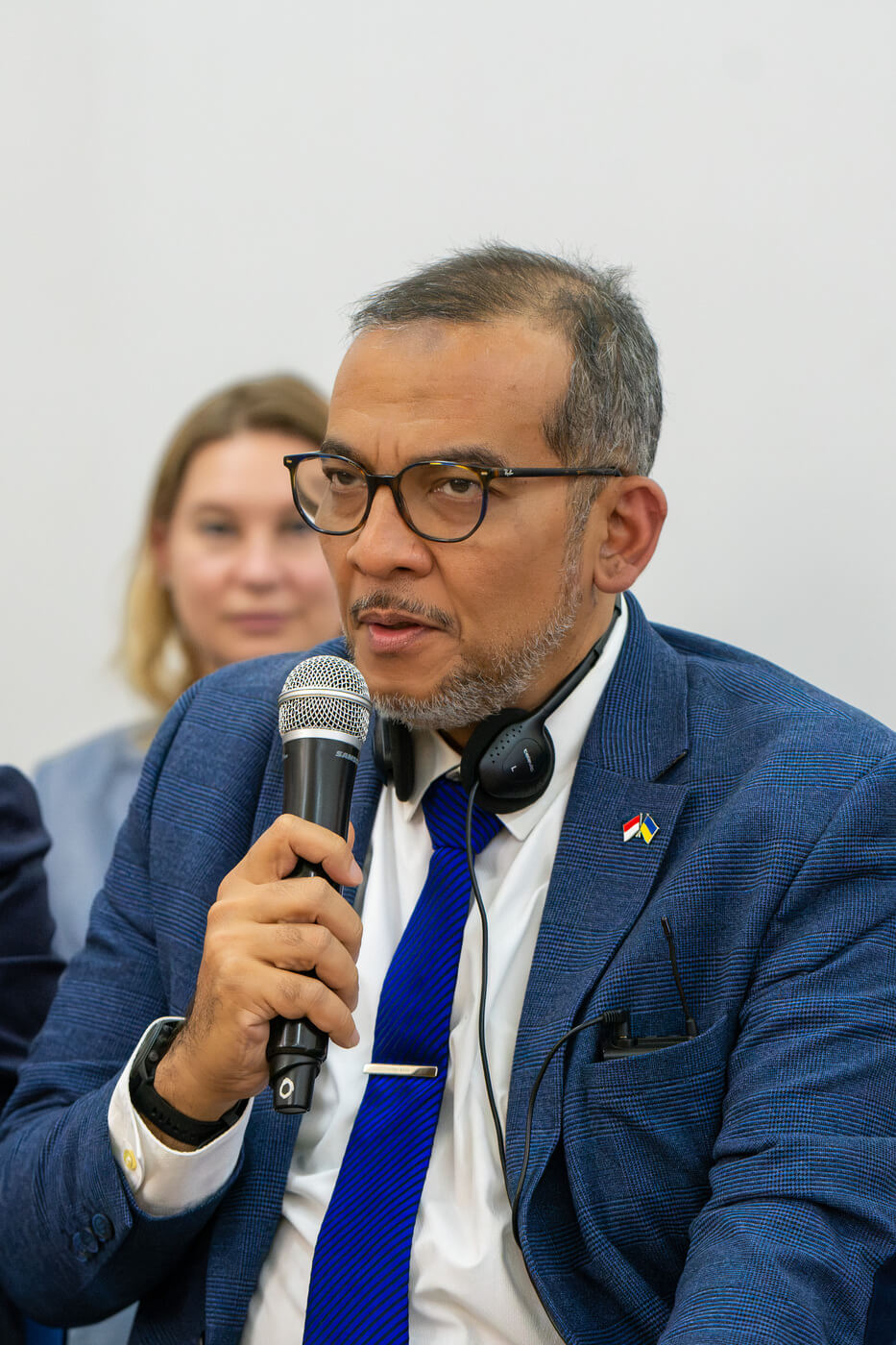
Arief Muhammad Basalamah, Ambassador Extraordinary and Plenipotentiary of Indonesia, emphasized the importance of educational diplomacy as an instrument of international cooperation, mutual understanding, and support for Ukraine during the war. He spoke about the Indonesian Embassy’s educational and cultural initiatives, academic mobility opportunities for Ukrainian students, joint research and cultural projects, and prospects for further cooperation with Ukrainian universities. ‘In Ukraine’s current context, educational diplomacy has become one of the most practical and resilient ways to sustain engagement and preserve long-term cooperation despite the constraints imposed by war. […] At a time when the world is increasingly divided by geopolitical tensions, educational diplomacy reminds us that universities, students, scholars, and cultural communities can continue building bridges even when many other channels become harder to use,’ Mr Basalamah concluded.

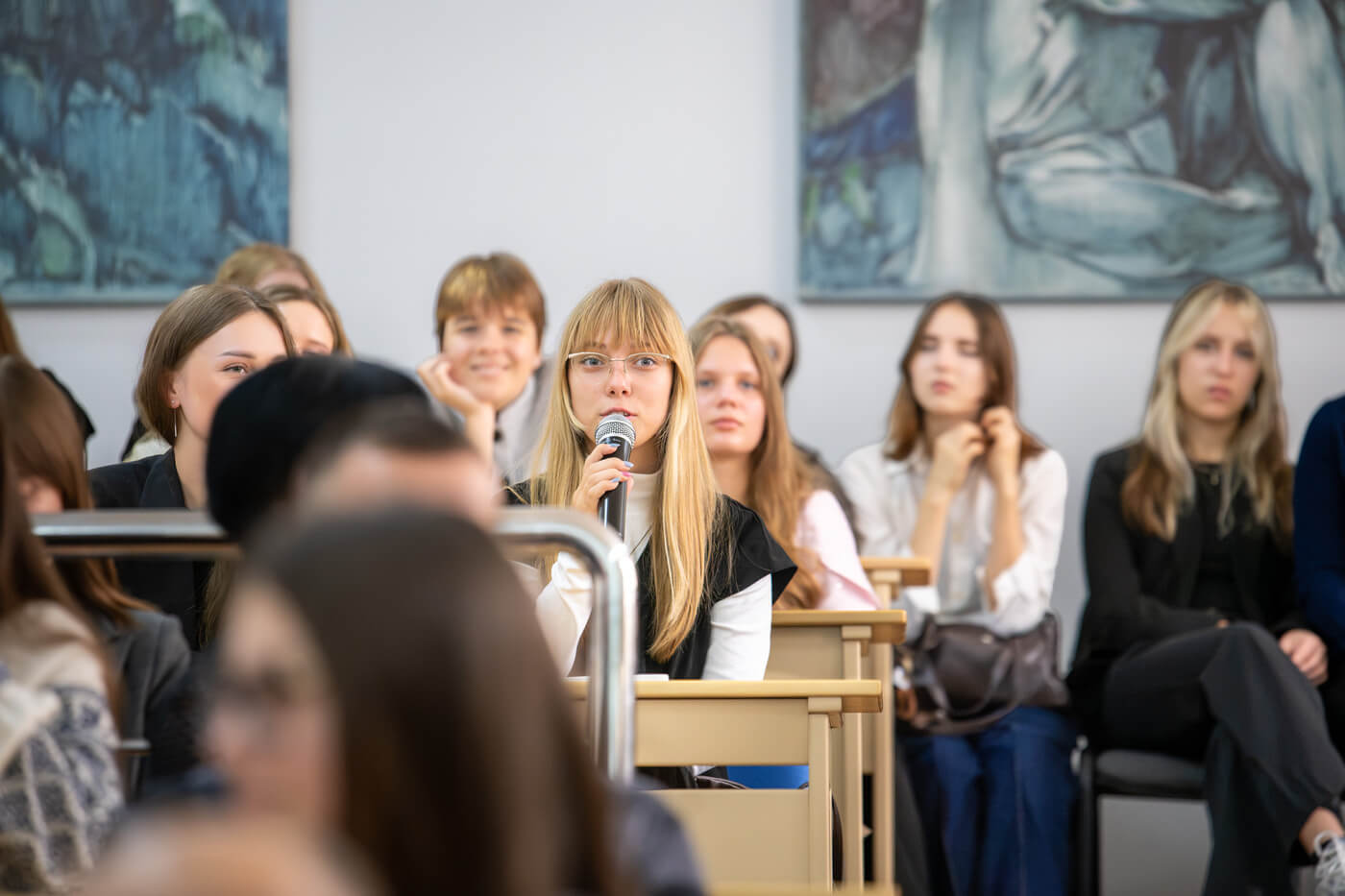
An important part of the forum was the active participation of students and academic staff of the National University of Ostroh Academy in the discussion moderated by Dmytro Shevchuk, vice-rector for research and teaching, Doctor of Sciences in Philosophy, and full professor. The conversation went well beyond a formal discussion of the announced topics, as students actively joined the dialogue and put questions to diplomats and experts, while representatives of the diplomatic corps readily responded, shared their experience, and engaged directly with the audience.
The discussion addressed the role of universities in contemporary diplomacy and international relations, academic cooperation and mobility as instruments of public diplomacy, and universities’ contributions to shaping a country’s international image and developing lasting international partnerships. Particular attention was paid to Ukraine’s European integration in education and research, the role of Ukrainian universities as ambassadors for Ukraine worldwide, international support, and opportunities for academic cooperation to support the country’s recovery. Participants also discussed security, countering disinformation, preserving academic values, and developing sustainable educational and research networks among universities in different countries.
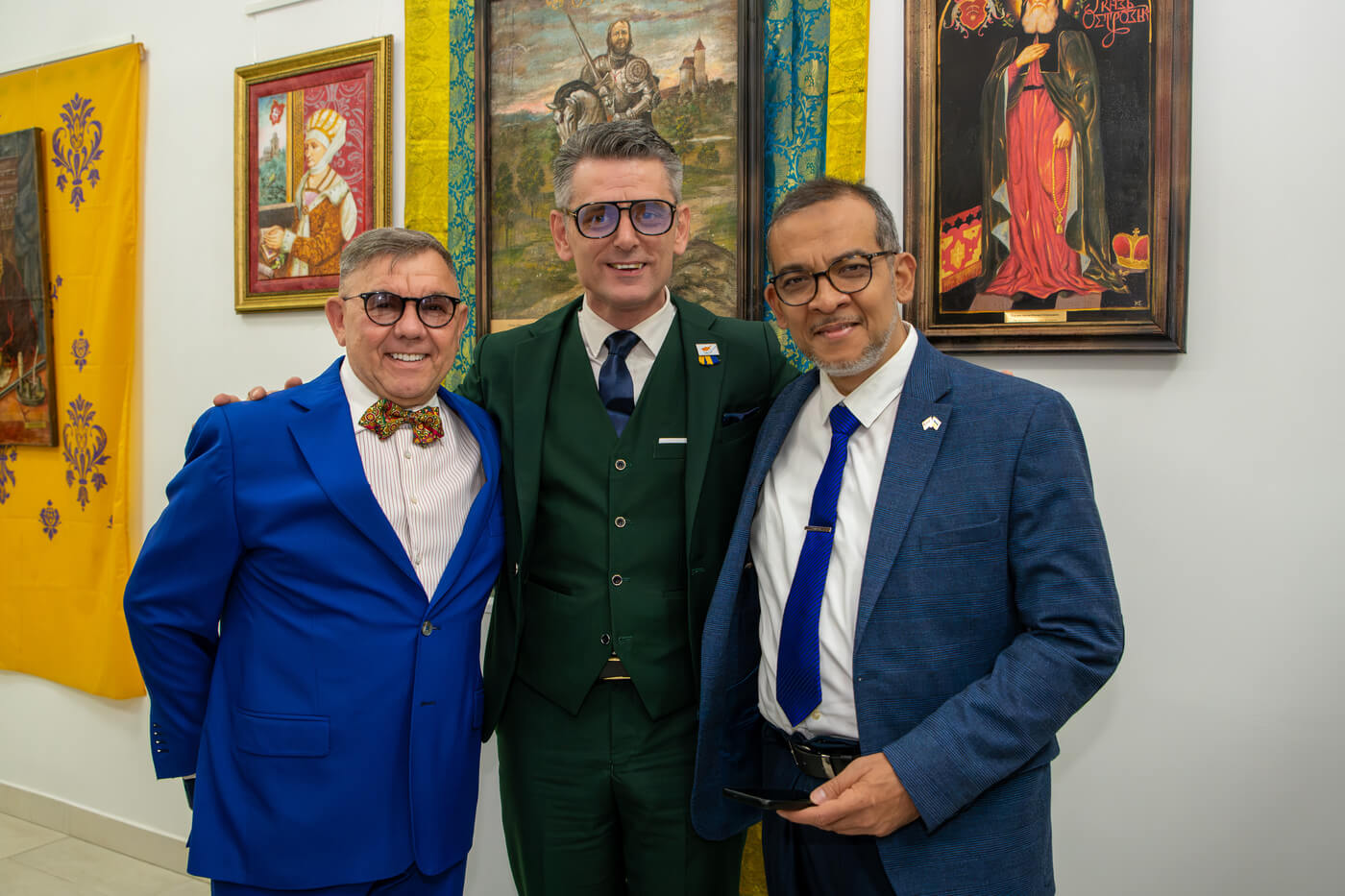
Andreas Zapounidis, acting deputy head of mission at the Embassy of Cyprus, took a particularly active part in the discussion. He readily answered students’ questions and demonstrated in-depth knowledge of Ostroh Academy’s history. The diplomat spoke about Prince Vasyl-Kostiantyn of Ostroh and the significance of his work for the development of education and culture. ‘Without Vasyl-Kostiantyn of Ostroh, there would have been no Ostroh Academy, and without Ostroh Academy, there would have been no Ukraine,’ he said, emphasizing the academy’s special place in Ukrainian history. Mr Zapounidis also asked students what they thought was the ‘secret’ that had enabled Vasyl-Kostiantyn of Ostroh to establish such an important centre of learning. One of the students from the Department of International Relations replied: ‘It’s a secret — we’re not telling.’ Her answer drew a warm response from the audience and became one of the liveliest moments of the discussion.

Ahmed Elhamshary, Ambassador Extraordinary and Plenipotentiary of Egypt, who had recently begun his diplomatic mission in Ukraine, also joined the conversation. The gathering gave him one of his first opportunities to speak with the Ukrainian youth and learn about their views first-hand. ‘It gave me great pleasure to be among the future generation of Ukraine. The discussion today showed me how deeply young Ukrainians think and how they look to the whole world,’ he said.

Other active participants in the discussion included Iryna Ivashchuk, honorary consul of Senegal; Sofiia Myhal, assistant to the Ambassador of the Sovereign Order of Malta; the Ambassadors Extraordinary and Plenipotentiary of Austria, Robert Müller; of Indonesia, Arief Muhammad Basalamah; of Pakistan, Kanwar Adnan Ahmed Khan; Paweł Terpiłowski, head of the Education and Science Department at the Embassy of Poland; and Dinesh Kumar Bhardwaj, deputy head of mission at the Embassy of India. The diplomats answered students’ questions, spoke about their own experience of international cooperation, and discussed the opportunities that international academic and professional exchanges offer young people.


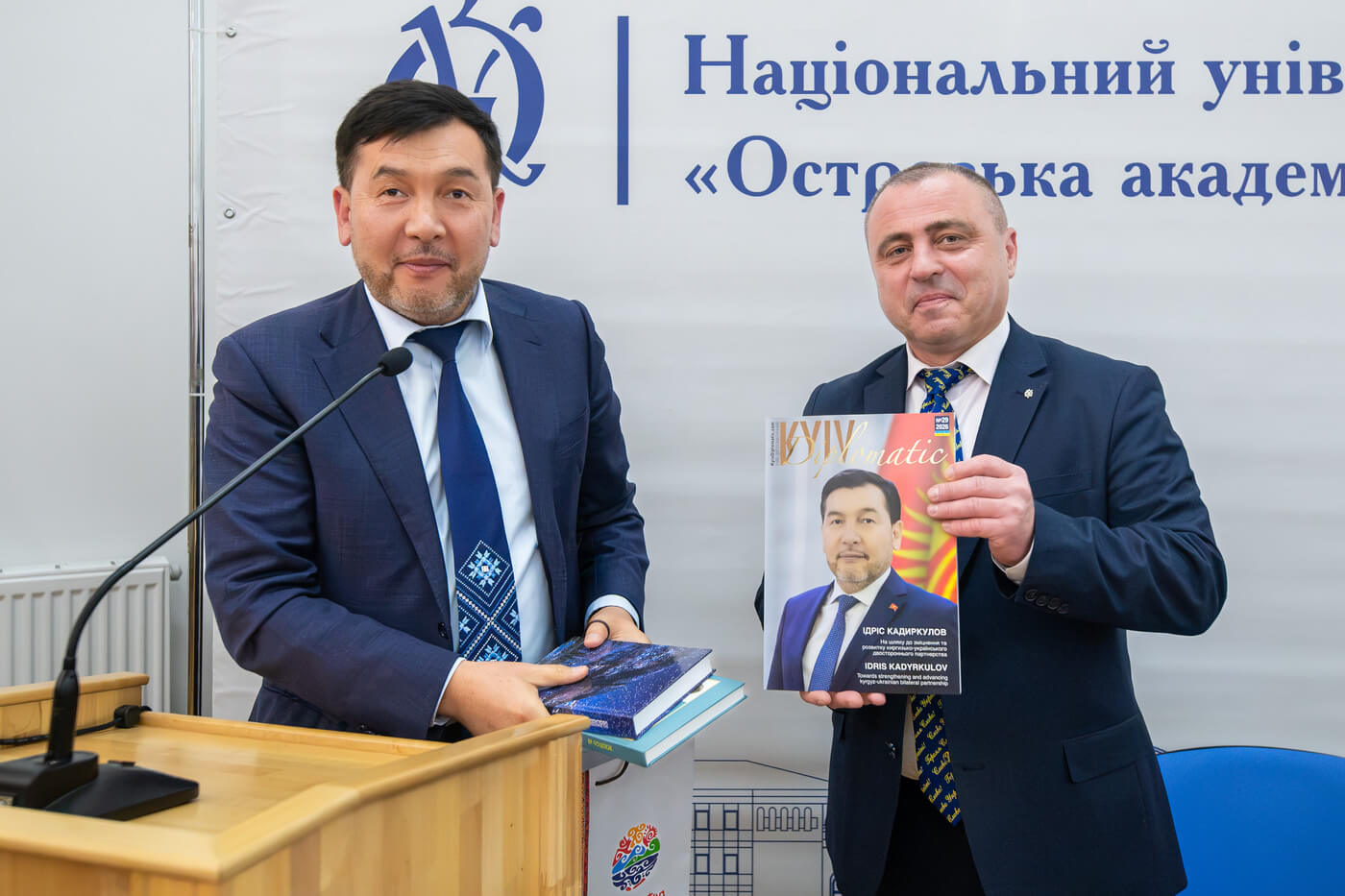
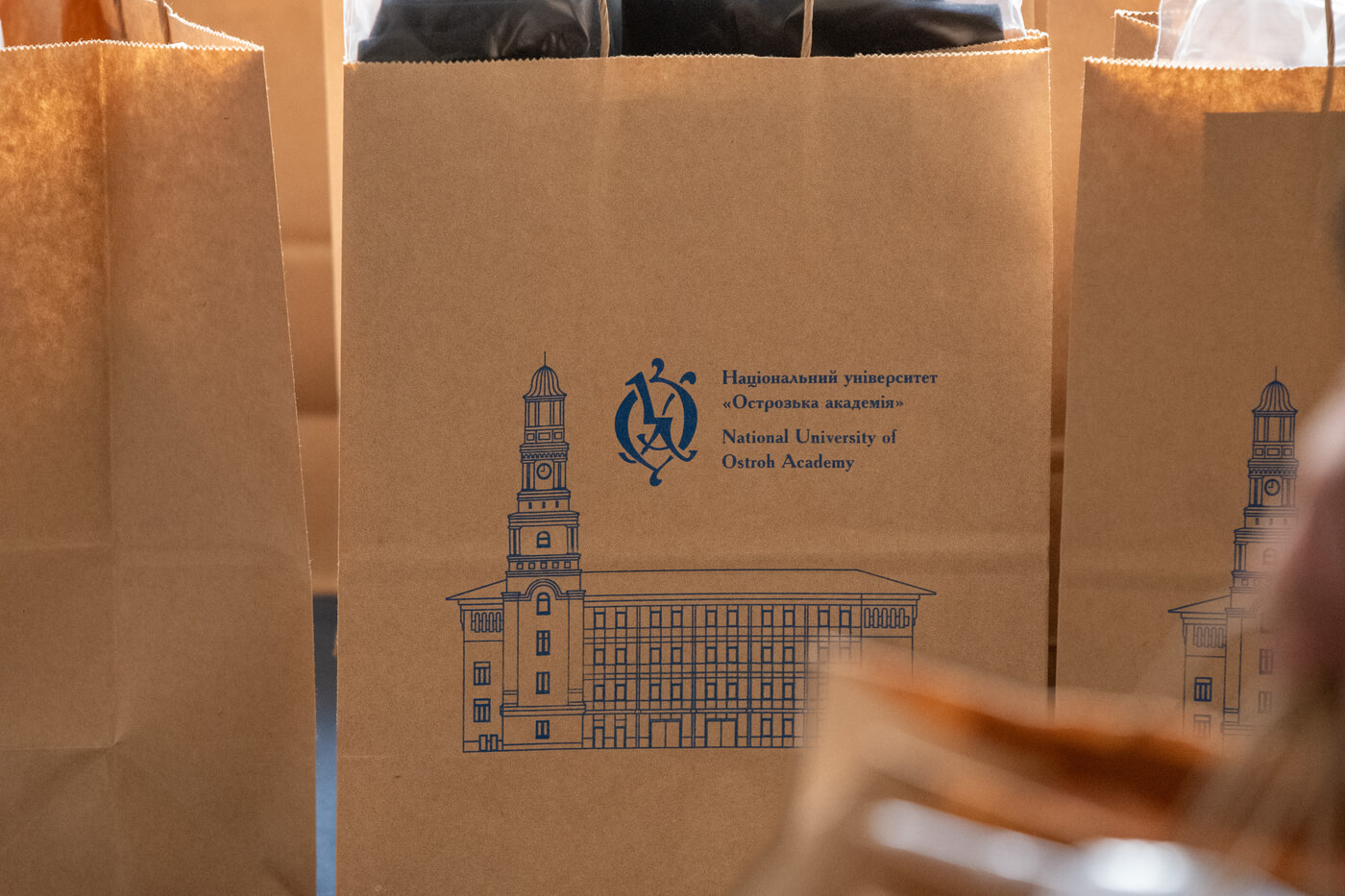
Eduard Balashov presented the guests with university souvenirs. In return, Idris Kadyrkulov, Ambassador Extraordinary and Plenipotentiary of Kyrgyzstan, presented the academy with valuable Ukrainian-language publications representing his country’s cultural and literary heritage: the folk epic Er-Toshtuk and Selected Works by Chinghiz Aitmatov. He also presented issue 29 of Kyiv Diplomatic, featuring an interview with him.
A distinctive feature of the gathering was that the conversations continued after the forum’s official programme had ended. The diplomats stayed to speak informally with students long after the discussion, returning to topics raised during the panel, answering further questions, and talking about education, international opportunities, and careers in diplomacy.
This direct dialogue was one of the forum’s most valuable aspects. Students were able not only to hear from diplomats during the formal discussion but also to speak with them in person, ask questions that arose as the conversation unfolded, and receive answers directly from international relations practitioners. For the diplomats, it was an opportunity to engage directly with the younger generation of Ukrainians, hear their views, and experience the students’ keen interest in international politics, diplomacy, and Ukraine’s role in the world.