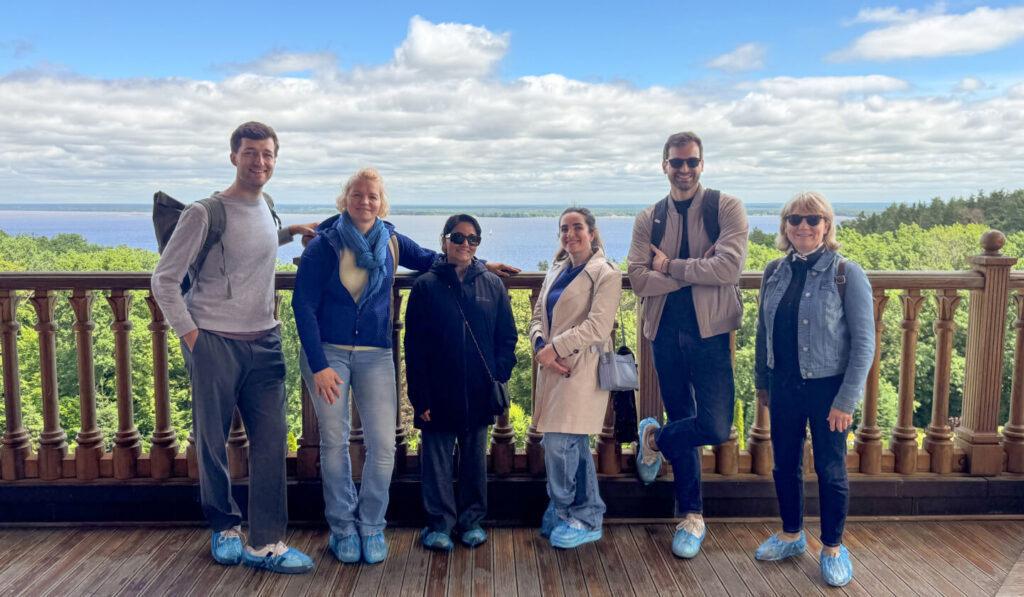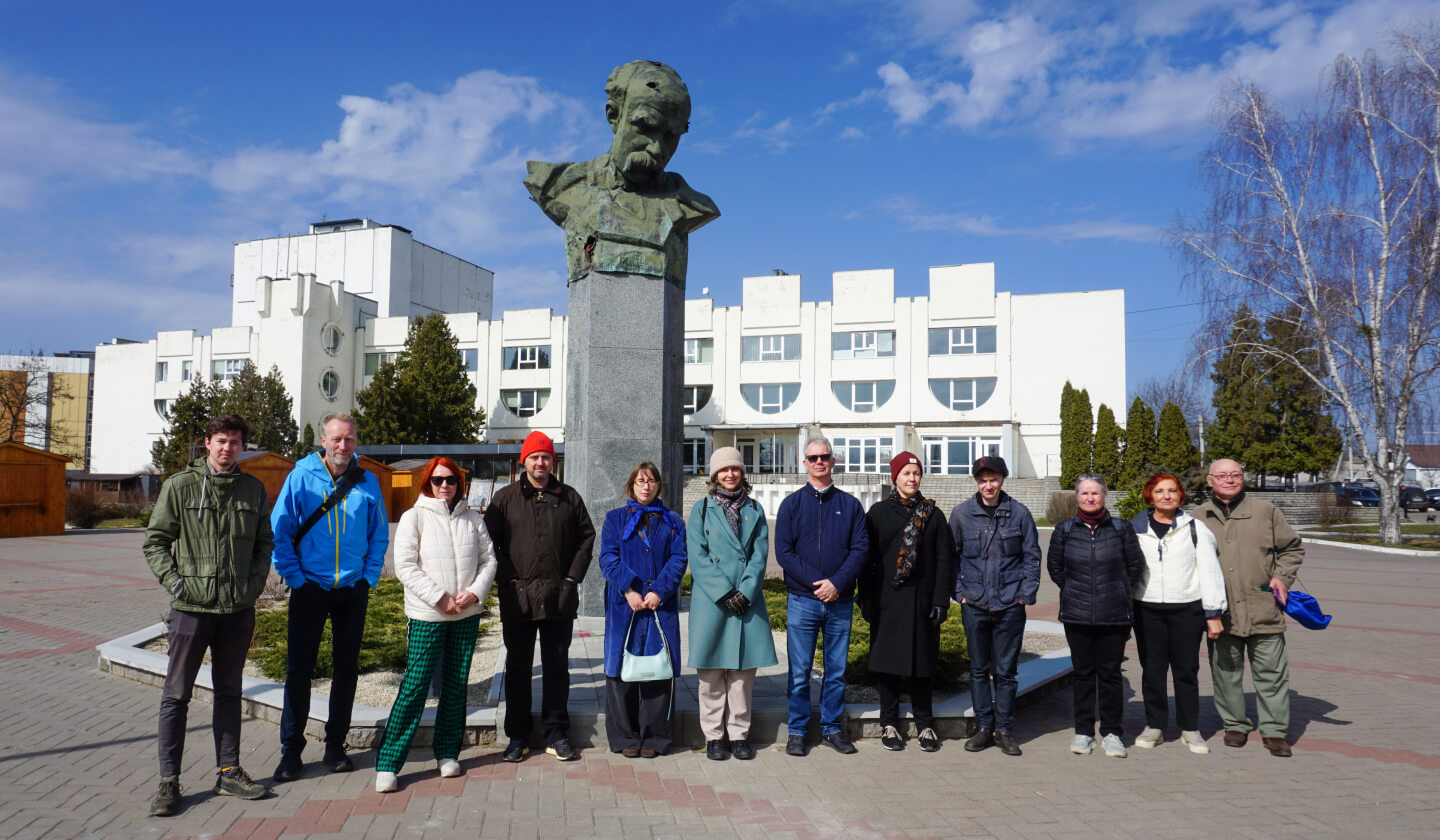
On Saturday, 21 March 2026, ahead of the 4th anniversary of the de-occupation of the capital’s suburbs, the team of the GDIP Media Centre organized a historical tour entitled The Heroic Kyiv Region for representatives of the foreign diplomatic corps. Among the event’s participants were Jonathan Conlon, Ambassador Extraordinary and Plenipotentiary of Ireland to Ukraine, as well as staff members of the Embassies of Latvia, Norway, and Sweden, the European Union Advisory Mission in Ukraine, and the United Nations Mission in Ukraine.
As part of the tour, the diplomats visited Moschun, Bucha, Borodianka, and Irpin — towns and villages near Kyiv that were among the first to face the occupying enemy troops at the beginning of the full-scale russian invasion and witnessed violence, demoralization, suffering, and death.
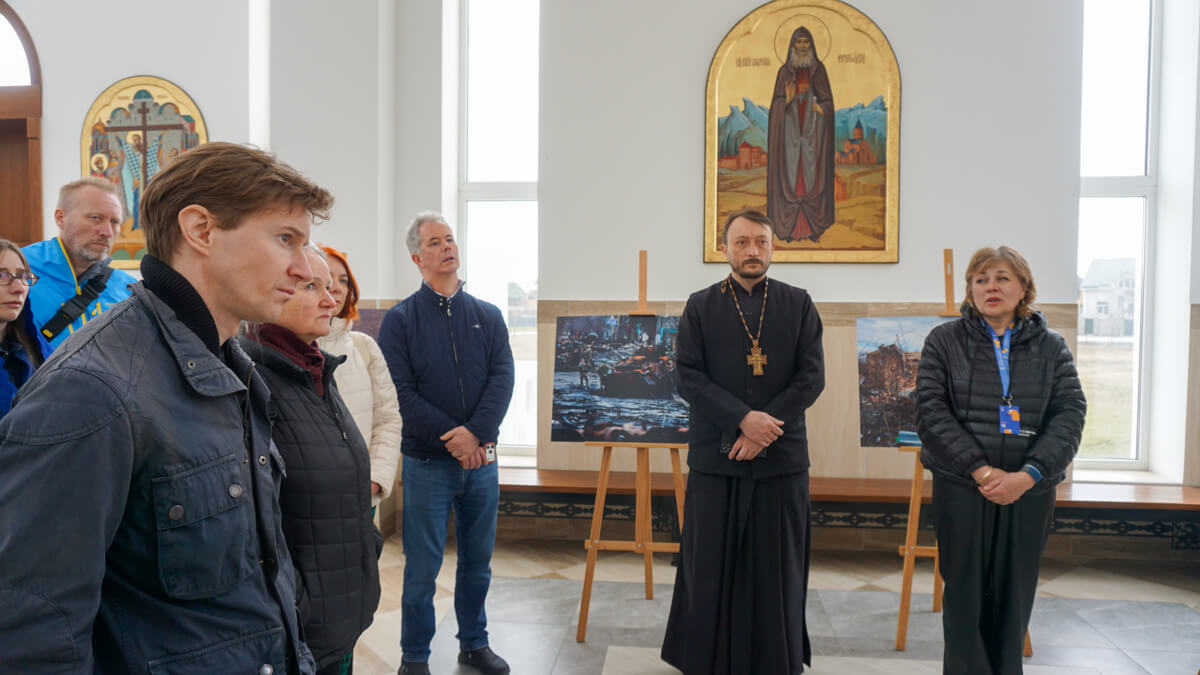
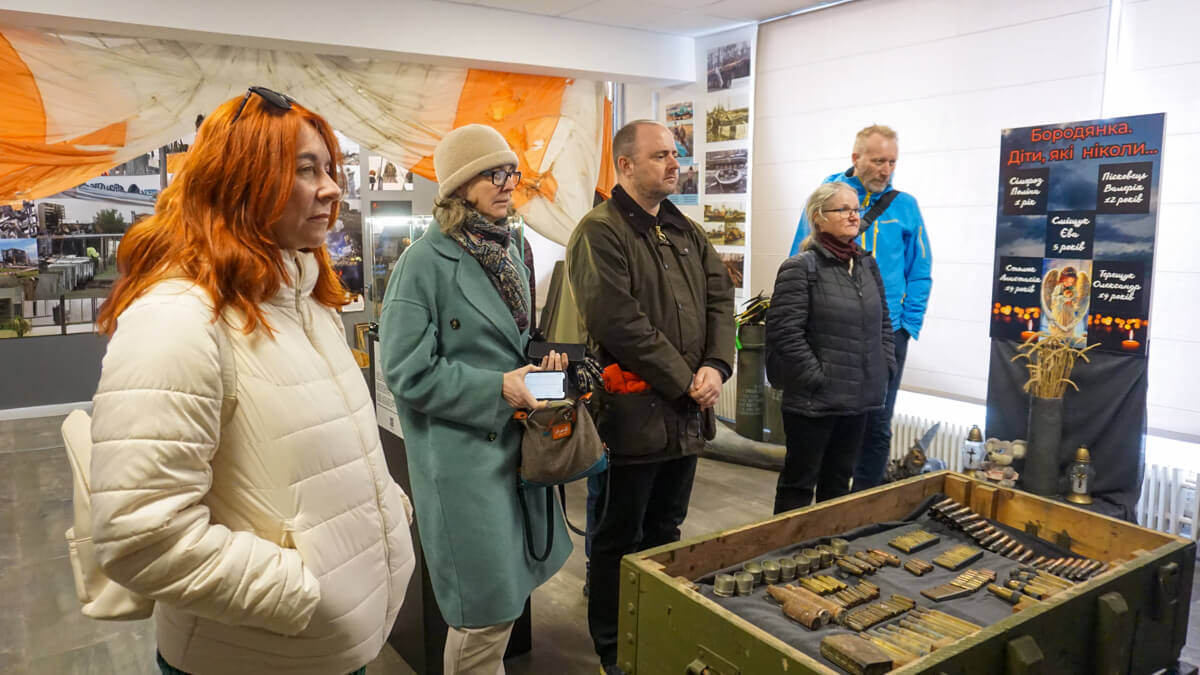
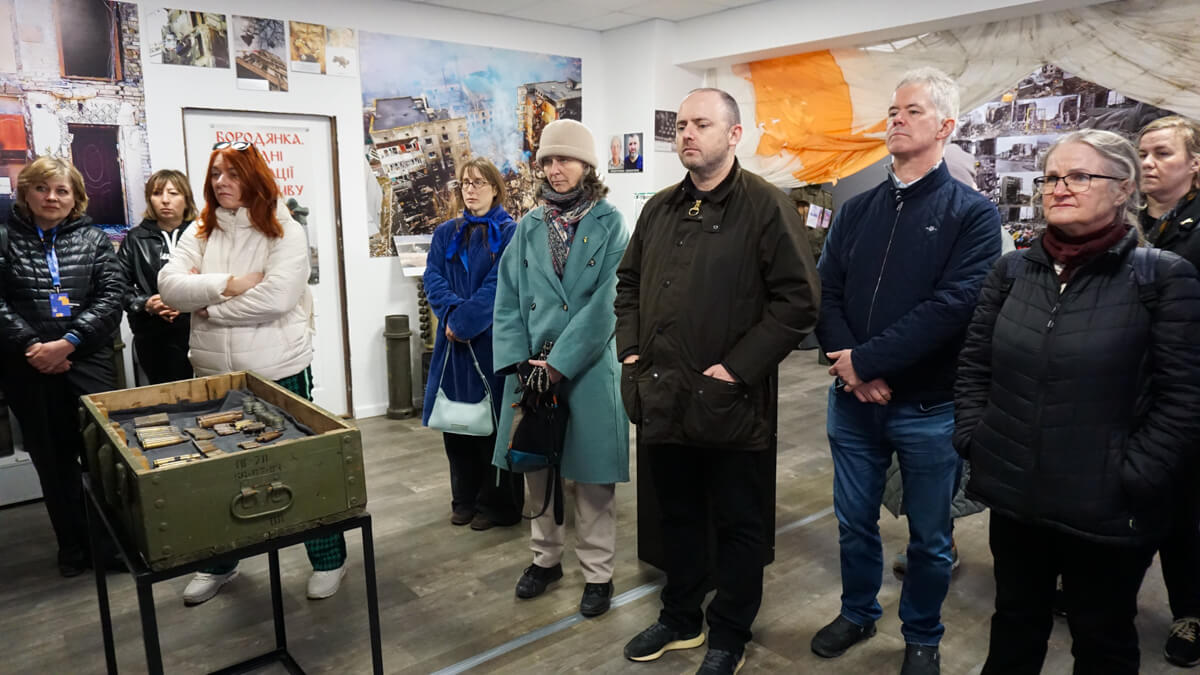
During the trip, in Moshchun, the foreign guests honoured the memory of Ukraine’s defenders at the Angels of Victory memorial, dedicated to the Ukrainian soldiers who lost their lives in the fierce battle to defend not only the village itself but also Kyiv — the battle that lasted from the final days of February until early April 2022. Later, in Bucha, the diplomats visited the Church of St Andrew the First-Called, where lies a mass grave of civilians who were shot and tortured. In Borodianka, the participants visited the museum space Borodianka: 33 Days of Occupation and Resistance, where objects that brought death, destruction, pain, tears, and deep emotional turmoil to the settlement are displayed. In Irpin, they saw the vehicle cemetery, the destroyed Central House of Culture, and the Romaniv Bridge, photographs of which shocked the entire world.
In Borodianka and Irpin, the diplomats also viewed murals by the well-known anonymous artist Banksy, which he left there during his visit in 2022. These graffiti works, whose central figures are Ukrainian children, were created on surviving walls of destroyed buildings. In this way, the artist sought to draw the attention of the international community to the scale of destruction in Ukrainian towns, which, of course, did not go unnoticed.
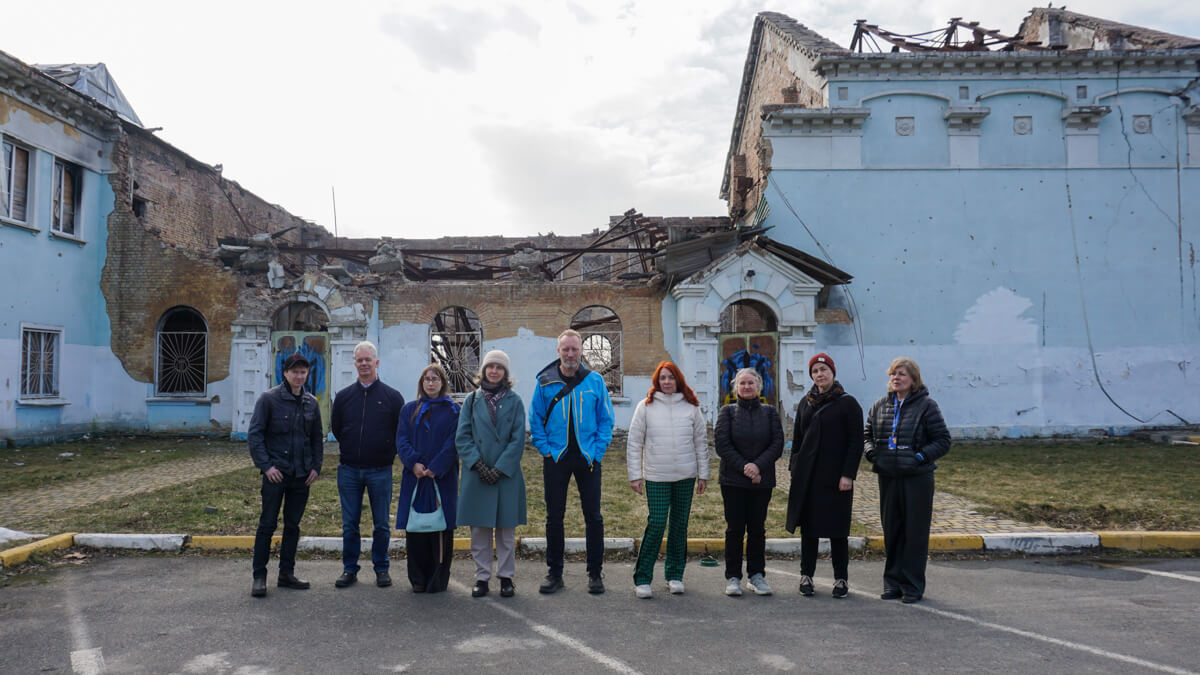
Having visited places where, despite the tragedies of genocide endured there, the strength and resilience of the national spirit remain especially tangible, the foreign diplomats once again saw for themselves the steadfastness of the Ukrainian people and their determination to root out evil from their land for the sake of the country’s future.
The stories of heroic resistance in Borodianka, Bucha, Irpin, and Moshchun once again recalled the events that shocked the democratic world and the courageous struggle of Ukrainians for their freedom and independence.