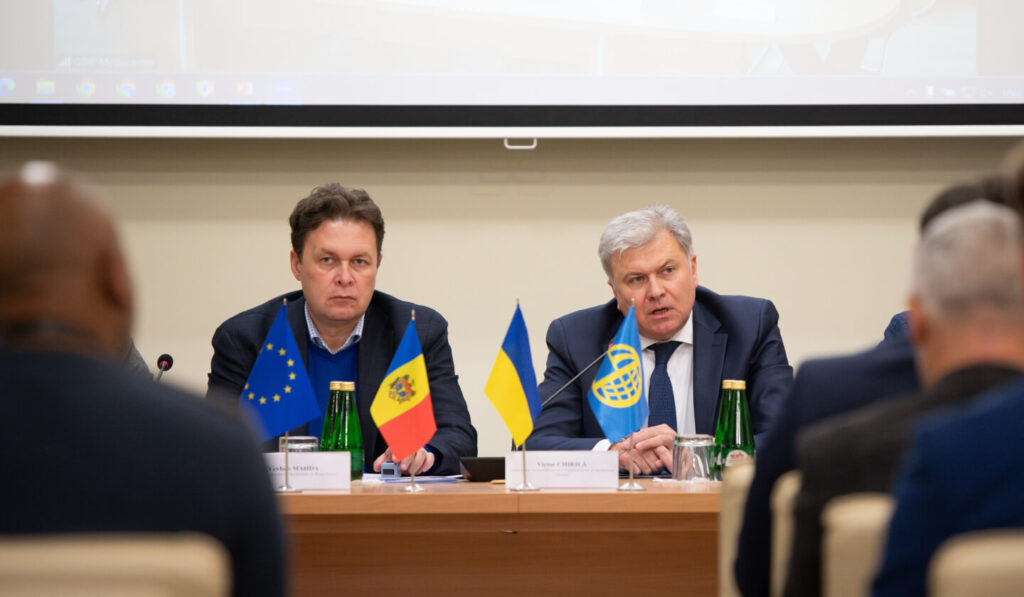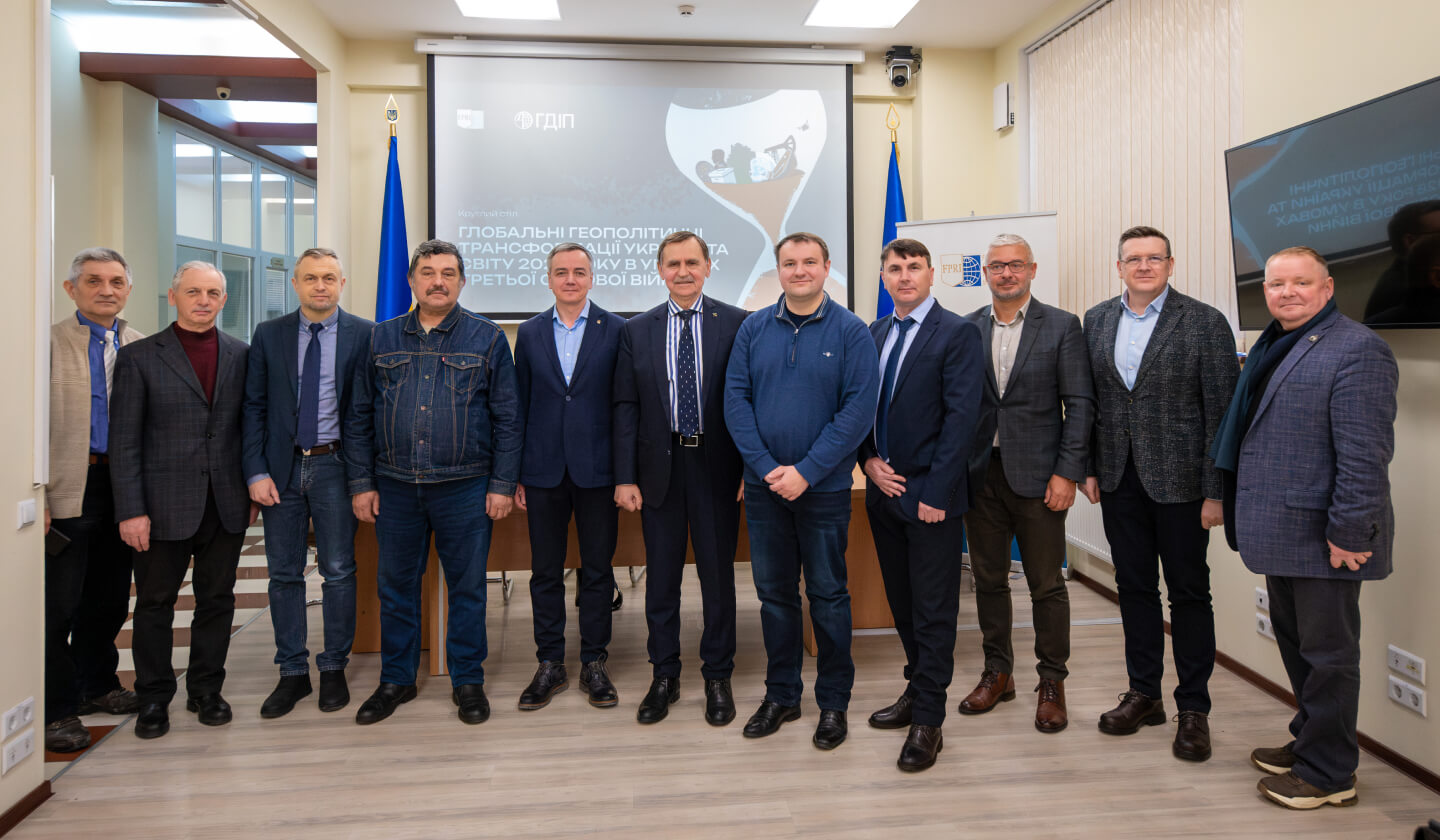
On Friday, 27 February 2026, the Foreign Policy Research Institute, with the organizational support of the State Enterprise ‘Directorate-General for Rendering Services to Diplomatic Missions’, held a round table titled Global Geopolitical Transformations Affecting Ukraine and the World in 2026 amid the Third World War.
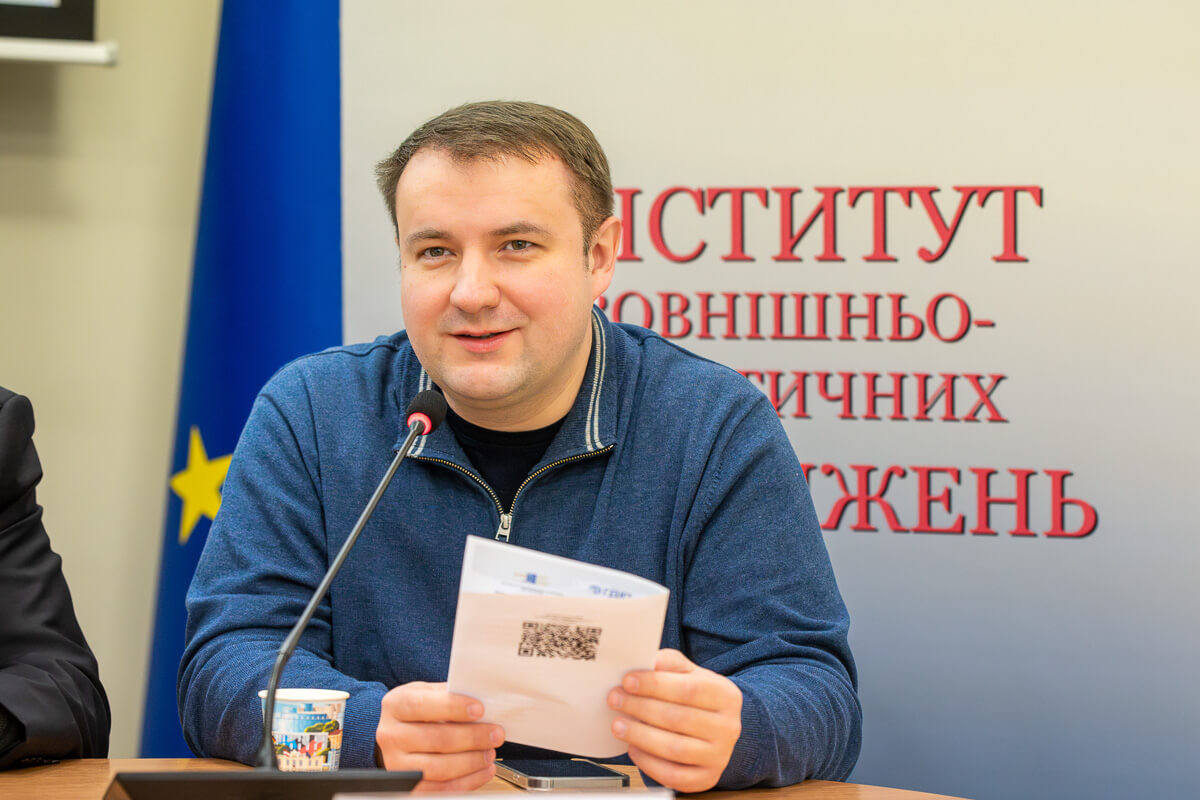
Hryhorii Perepelytsia, director of the Foreign Policy Research Institute, full professor at the Department of International Relations and Foreign Policy of the Educational and Scientific Institute of International Relations of the Taras Shevchenko National University of Kyiv, Doctor of Political Science, moderated the event.
Opening the roundtable, Hryhorii Perepelytsia stressed that the contemporary system of international relations is rapidly collapsing, while the world is entering a phase of large-scale geopolitical transformation in which the struggle for a new balance of power between the United States, China and russia will play a major role. According to him, 2026 may become a turning point: instead of large-scale fronts such as those seen during the First or Second World Wars, the world may witness a series of local conflicts across different regions, while the nature of warfare itself will increasingly rely on new technologies and approaches. The expert also noted that Ukraine has found itself at the epicentre of a global conflict that is increasingly acquiring the characteristics of a Third World War. He emphasized that the United States is seeking a new model of bipolarity and strategic stability with russia, focusing primarily on containing China, while Europe risks being left without a solid security anchor.
Among the speakers at the round table were Oleksandr Khara, director of the Centre for Defence Strategies; Vladyslav Klochkov, major general and scholar; Valentyn Badrak, director of the Centre for Army, Conversion and Disarmament Studies; Petro Oleshchuk, lecturer at the Department of Political Science of the Taras Shevchenko National University of Kyiv, Doctor of Political Science, Ukrainian political analyst; Mykhailo Samus, military and political analyst, director of the New Geopolitics Research Network.
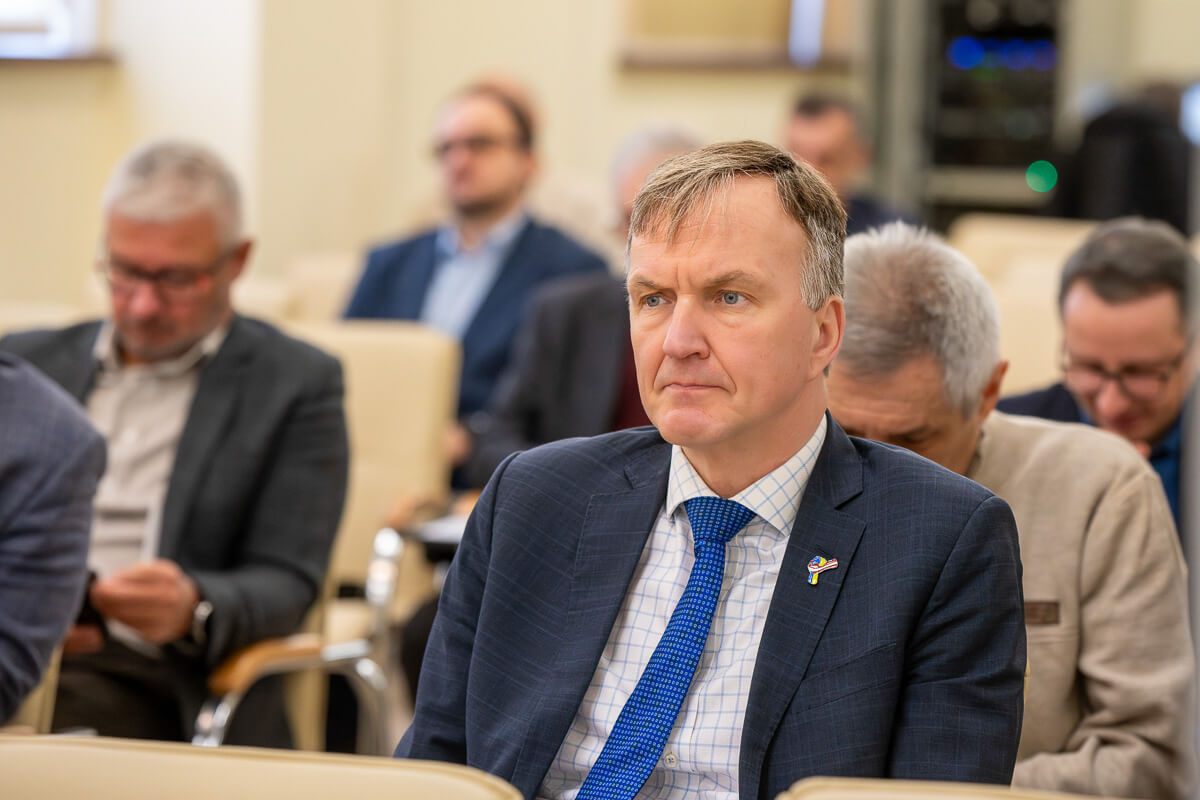
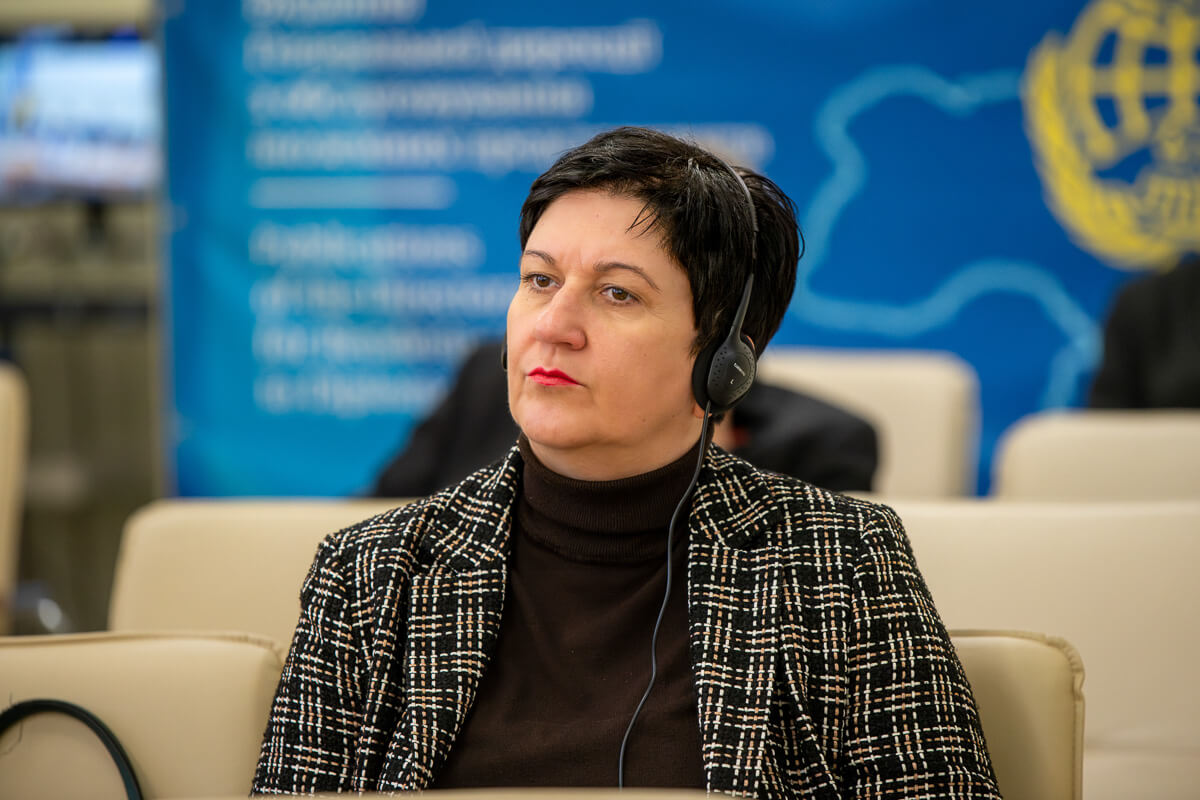
During the event, experts engaged in a substantive discussion of a number of important issues, including the shift in the global balance of power, in particular China’s waiting game, the United States’ pursuit of a ‘new bipolarity’, russia’s revanchist intentions, and Europe’s inability to attain global agency; the role of major geopolitical actors as disruptors of the existing system of international relations; Donald Trump’s ability to reverse the international system to a ‘new bipolarity’; China’s potential capacity to establish a China-centred unipolar world following the Third World War; the assessment of 2026 as a potentially decisive year in the russian-Ukrainian war and in efforts to deter the Third World War, as suggested in the framework of the Munich Security Conference 2026; Europe facing challenges from both russia and the United States; Europe’s strategic choices in 2026: war with the russian federation or the appeasement of russia at the cost of Europe’s future; projects for a future European security architecture: an order emerging from NATO’s ruins, a NATO + EU tandem, or building Europe’s own autonomy; and possible scenarios for the russian-Ukrainian war in 2026 from Ukraine’s perspective: victory, defeat, or a temporary ceasefire followed by the continuation of the conflict.
In his remarks, Oleksandr Khara focused on the future European security architecture, noting that a model of a coalition of the willing is already emerging — a group of states that recognize the threat posed by russia and are prepared to invest in defence and deterrence. Under such circumstances, Ukraine could gain new opportunities given its strategic position, the experience in resisting russian aggression, and the readiness to conduct high-intensity warfare. At the same time, the speaker expressed scepticism regarding the prospects for a renewed bipolar world order and argued that the current US administration is engaged in political confrontation with a consolidated Europe — a development that risks weakening transatlantic unity. He also drew attention to growing risks surrounding Taiwan, China’s expanding nuclear capabilities, russia’s revisionist ambitions, and the potential synchronization of conflicts across different regions of the world. Summing up, Oleksandr Khara noted that the security guarantees currently being proposed for Ukraine are not comprehensive, as they do not include either a nuclear umbrella or NATO membership, so they rather should be understood as security assurances or commitments of security assistance.
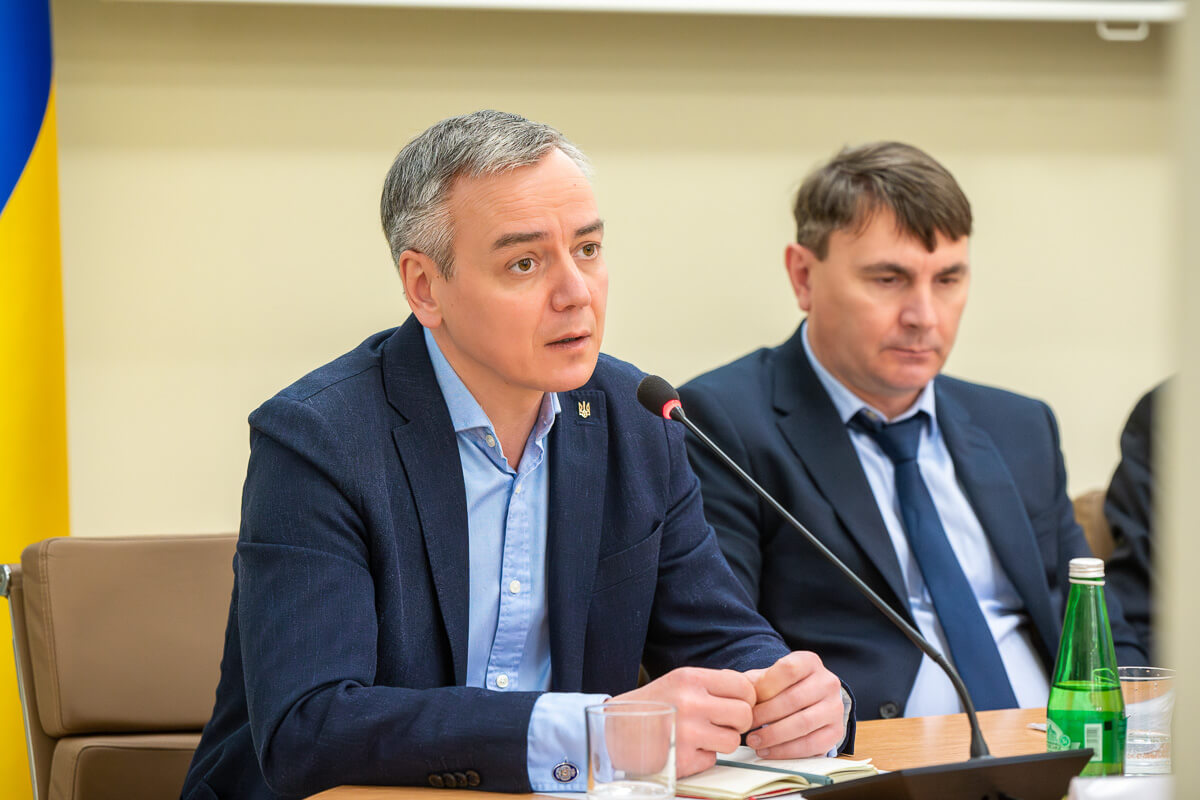
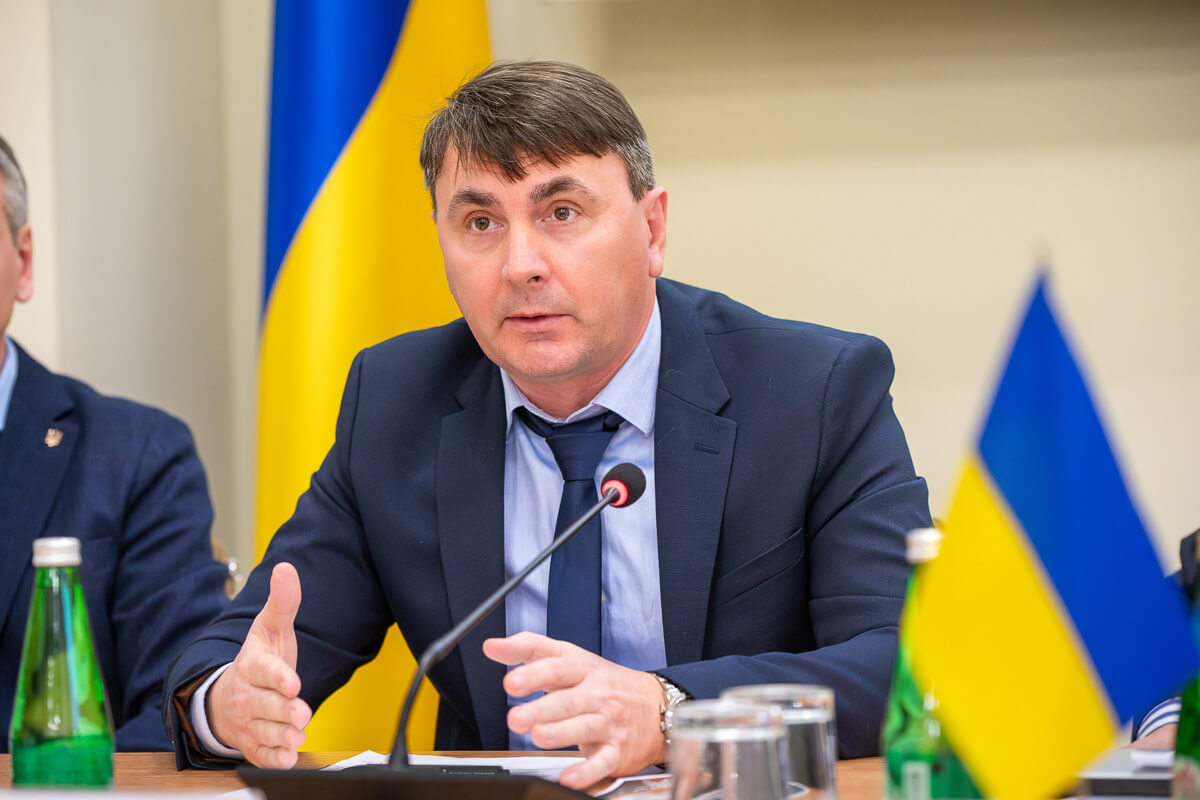
For his part, Vladyslav Klochkov emphasized that Ukraine is at the centre of global geopolitical change and has in fact become the principal arena of confrontation between democracies and autocracies amid growing global instability:
‘Ukraine today cannot be viewed as a regional case. It is a central node in the transformation of the world order […]. As we can see, the emerging global order is shifting from a model of unipolarity to one of conflictual multipolarity.’
The expert also stressed the need for the West to consolidate, strengthen defence integration, and take Ukraine’s battlefield experience into account in shaping the new security architecture.
In his remarks, Petro Oleshchuk argued that contemporary international developments already display certain characteristics of a world war, although its definitive classification can only emerge with historical hindsight:
‘The growing number of local conflicts around the world may in fact constitute what could be called a Third World War, and it is possible that future historians will name it this way and identify the annexation of Crimea as its starting point.’
The speaker also highlighted the intensifying processes of globalization, pointed to the de-ideologization of international politics, and noted the crisis of existing security institutions, including NATO, drawing attention to the new opportunities for Ukraine in the formation of regional alliances in Eastern Europe.
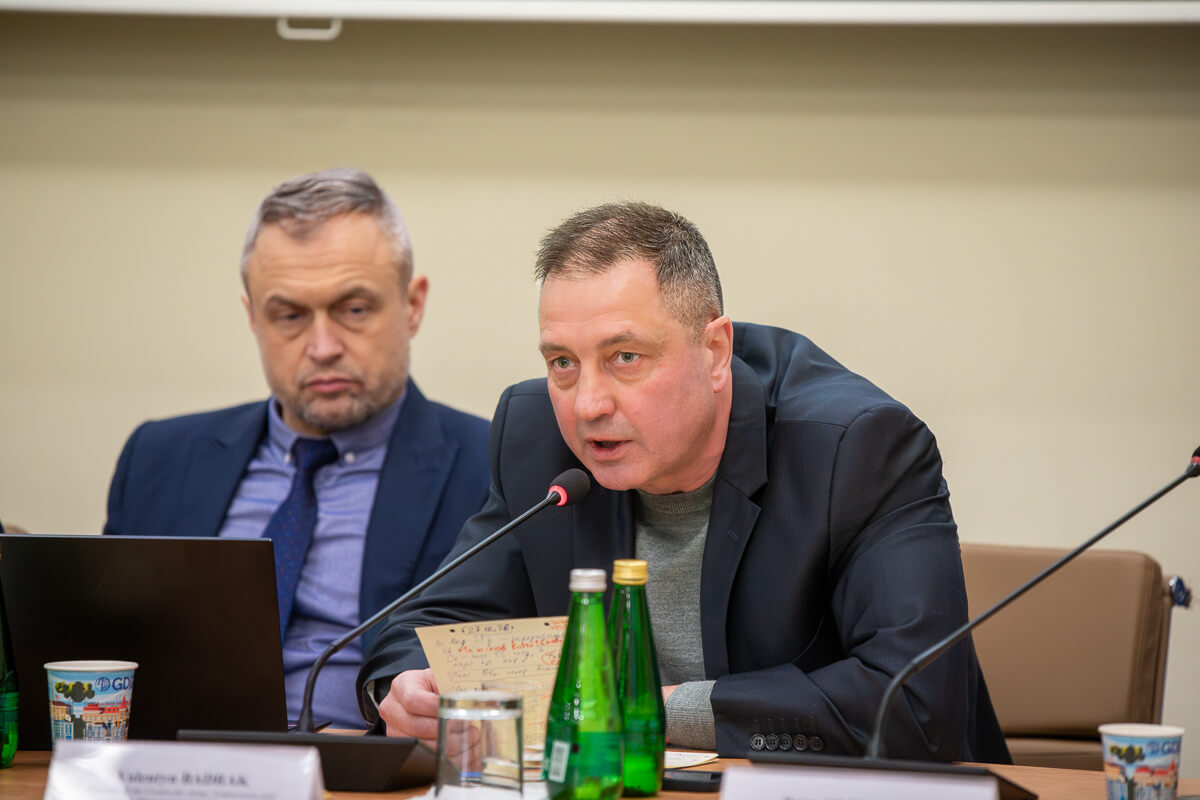
‘Europe must realize that without Ukraine it risks defeat and the prospect of a direct military confrontation, while without Europe’s support Ukraine may also fail to withstand the pressure. Only joint action can change the balance of power,’ stressed Valentyn Badrak in his remarks.
The speaker also noted that the current war has exposed the weakness of European armies and their critical reliance on Ukrainian forces and called for genuinely enhanced support for Ukraine’s defence.
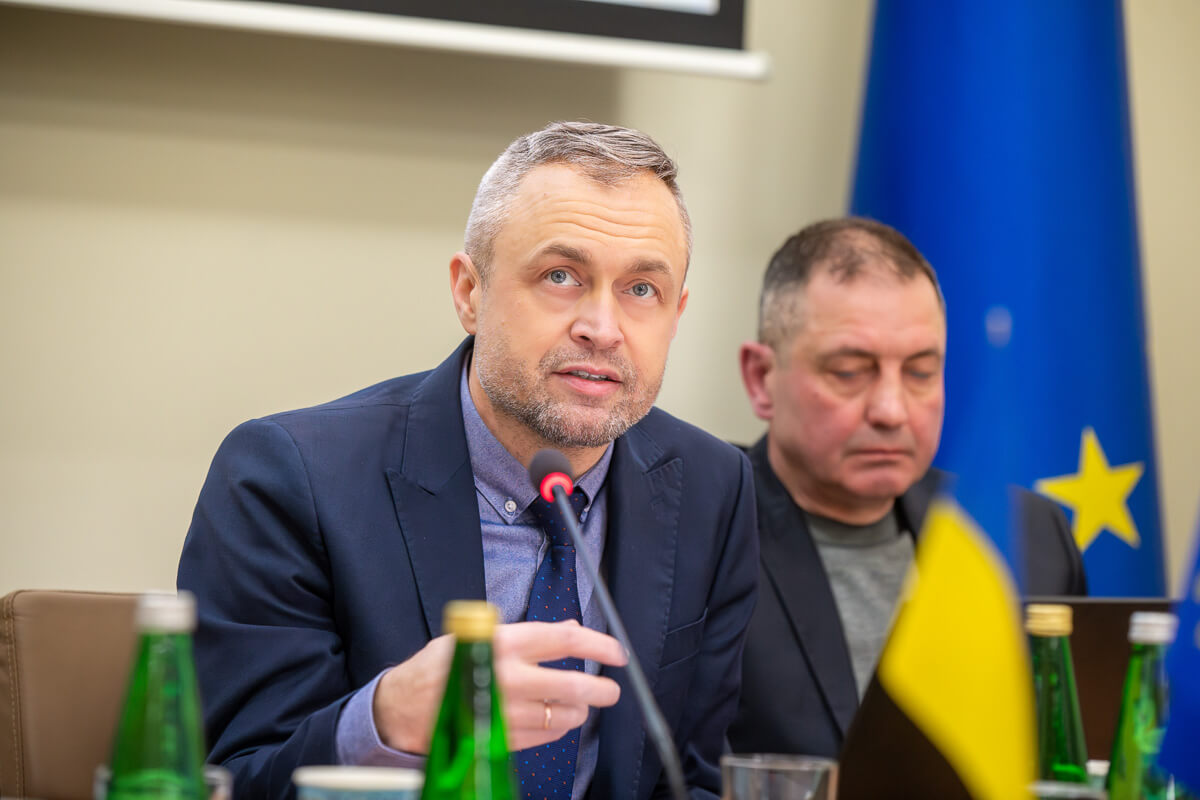
During his remarks, Mykhailo Samus noted that the future of global politics will be determined not only by traditional military power but primarily by control over technologies and resources:
‘We are witnessing a unique situation in which a non-nuclear state is deterring a nuclear power thanks to its technological advantage.’
The expert added that the current technological revolution, including artificial intelligence and quantum technologies, is radically transforming the economy, finance and warfare, leading to new mechanisms of state influence and control.
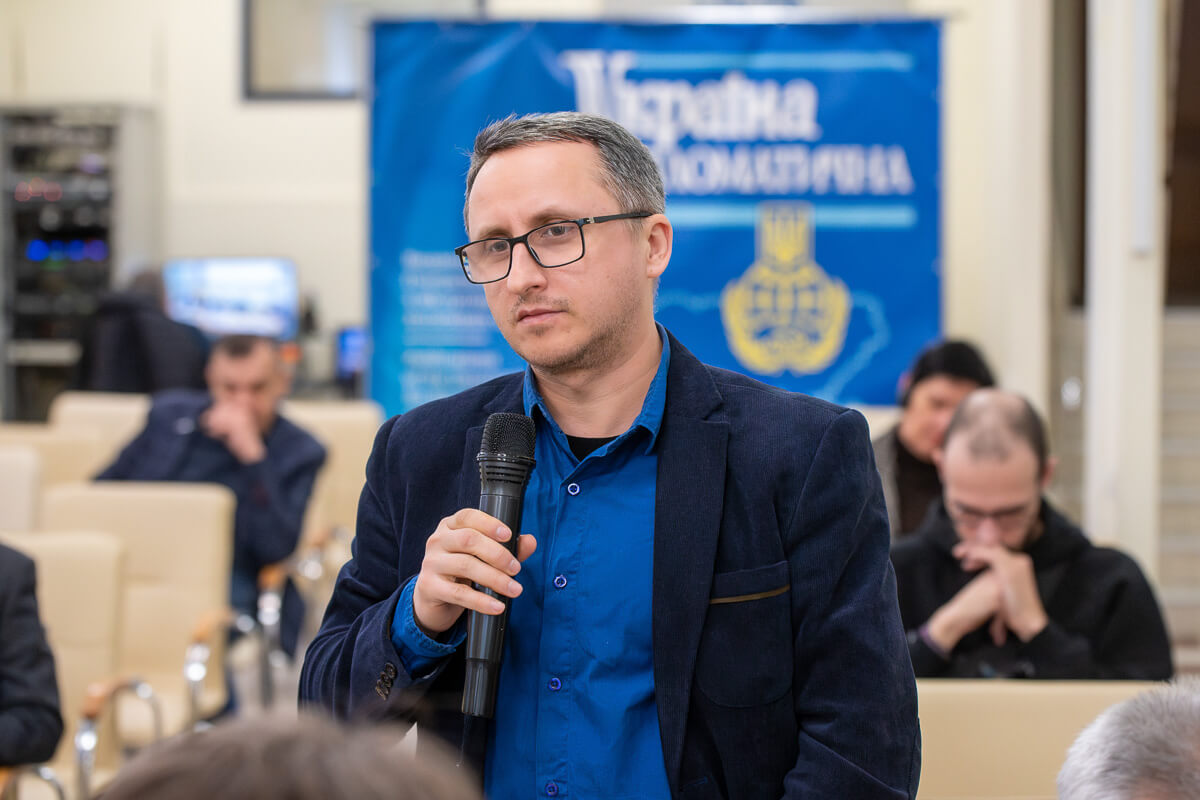
Following the experts’ presentations, a lively discussion unfolded, bringing together scholars, lecturers, students, and diplomats.