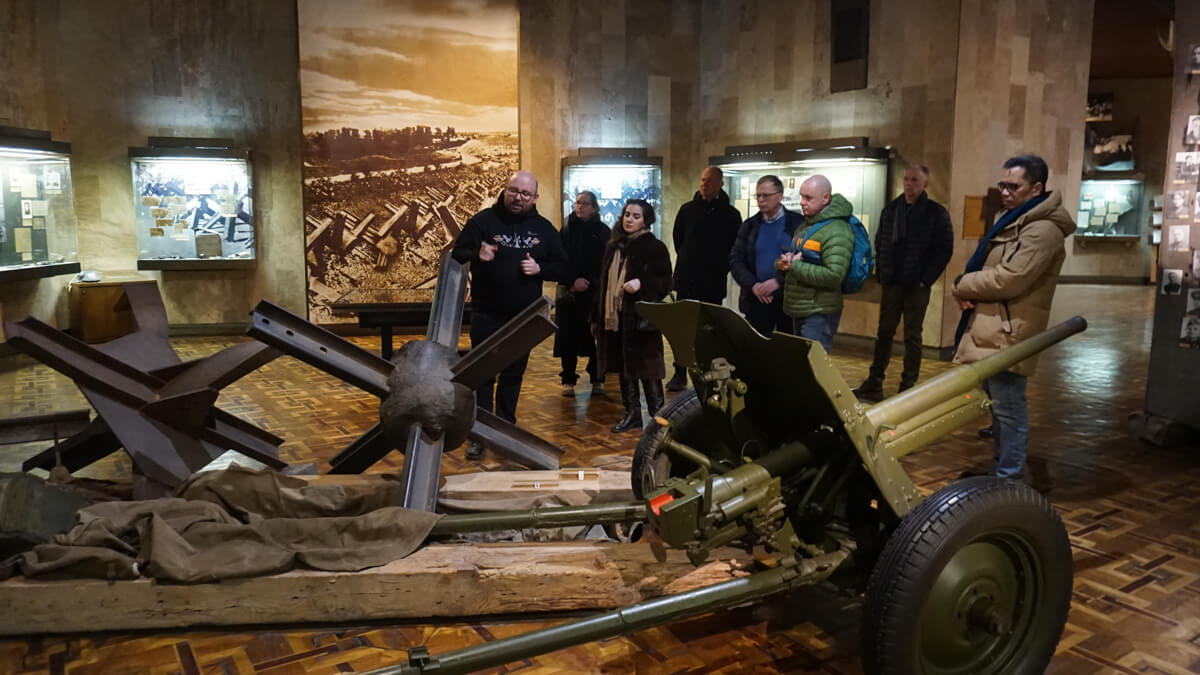
On Saturday, 28 February 2026, employees of the Media Center Directorate of the GDIP took representatives of the foreign diplomatic corps to the National Museum of the History of Ukraine in the Second World War for a thematic tour titled For Ukraine’s Freedom: History, Memory, a View from Above. The event marked four years since the onset of russia’s full-scale invasion of Ukraine.
The tour was joined by staff from the embassies of Denmark and Sweden, as well as representatives of international organisations, namely the Office of the United Nations High Commissioner for Refugees and the European Union Advisory Mission to Ukraine.
The programme of the visit included three large-scale exhibitions. The first exhibition, FOR FREEDOM — a joint museum project with the Romulus T. Weatherman Foundation — focuses on foreign defenders of Ukraine who chose to join the Ukrainian resistance against the global threat. The project highlights the scale of international support for Ukraine, ranging from military and humanitarian assistance to the personal choices of foreign citizens to join the ranks of the Defence Forces of Ukraine.
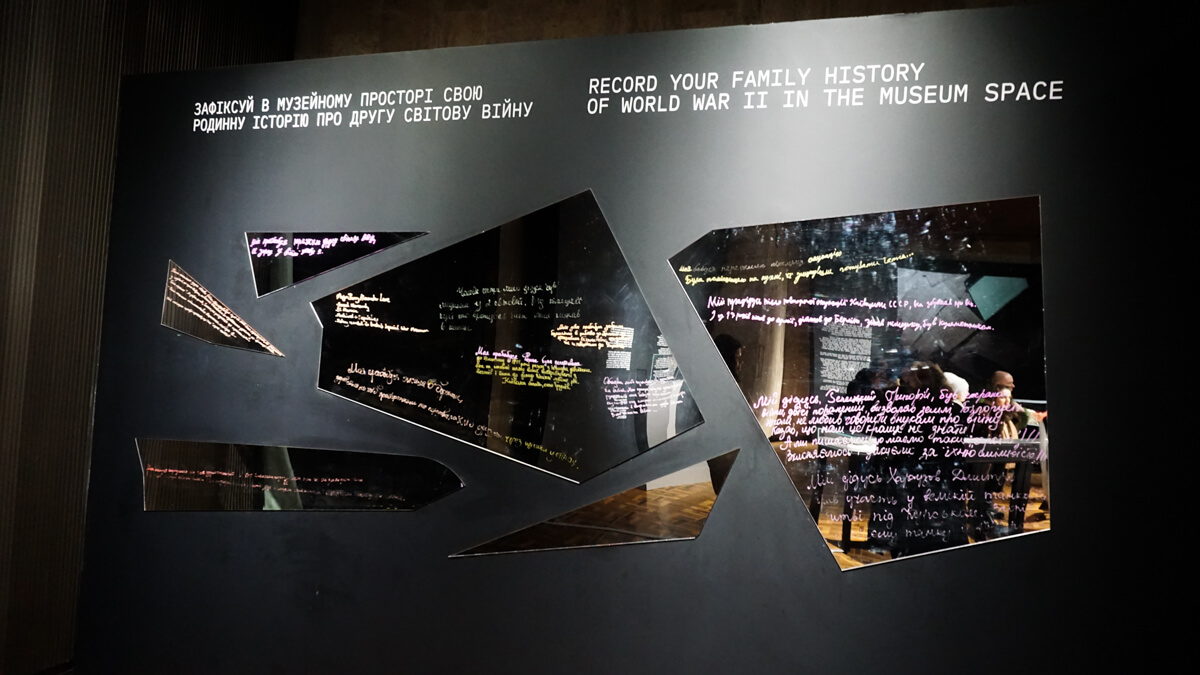
The second location was the exhibition titled Memory: Interchange. It drew on the family histories of three artists: Polina Kuznietsova (Ukraine), Eva Neidlinger (Germany), and Jenny Alten (Germany). The life paths of their ancestors intersected in Ukraine during the Nazi occupation. In particular, Eva Neidlinger’s great-grandfather — a Wehrmacht soldier — was deployed in Kharkiv, where Polina Kuznietsova’s grandmother was experiencing the hardships of wartime childhood at the same time. The project addresses the complex issues of historical memory, responsibility, and intergenerational dialogue through deep reflection and personal narratives.
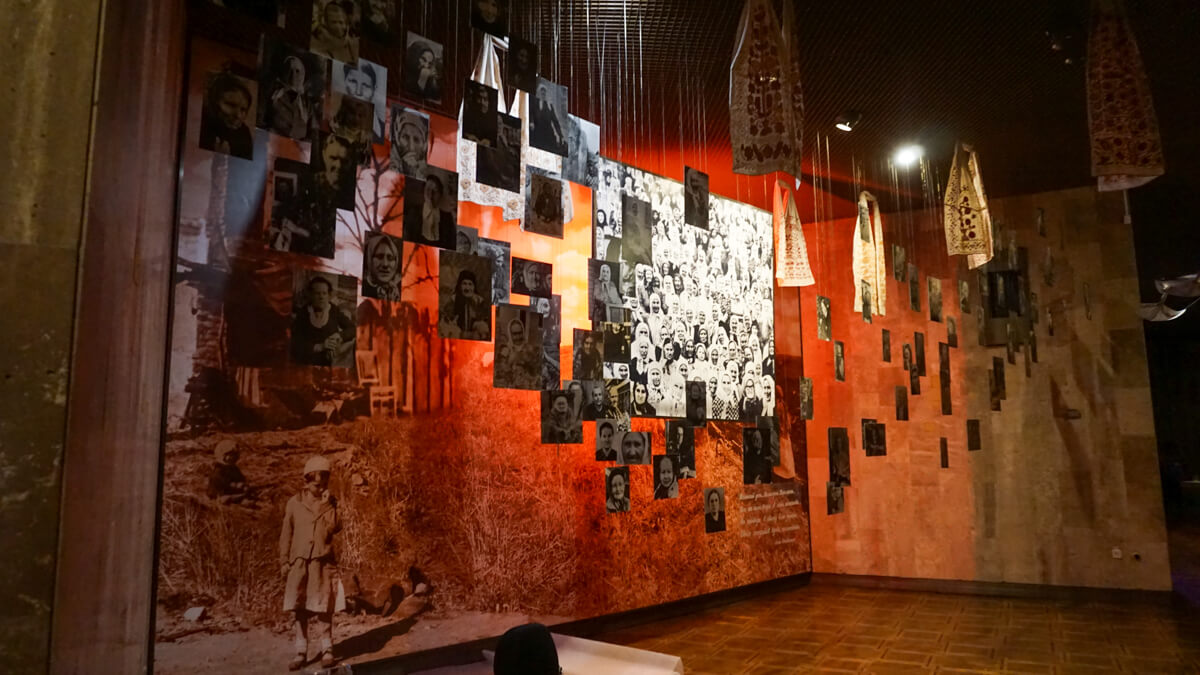
The final stage of the tour was the exhibition titled War: Inverse Perspective. It offered an artistic reflection on the events of World War II and the russian-Ukrainian war. The exhibition presents works by more than 40 artists from across Ukraine. In total, the exhibition features more than 150 artefacts displayed across nearly 2,000 square metres.
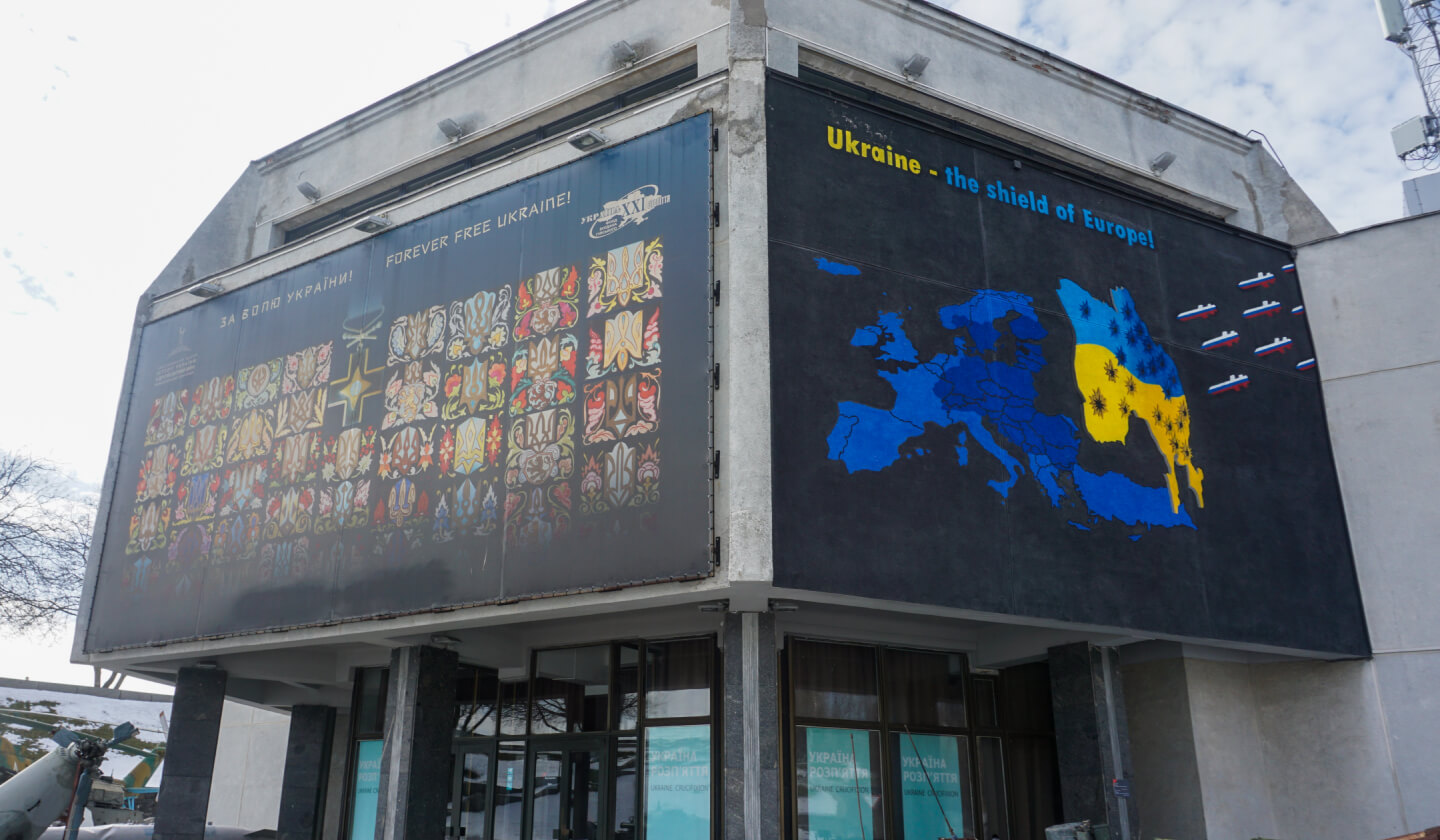
The unique project that elicited the greatest emotional response among the tour participants was Ukraine – Crucifixion, an unprecedented initiative in international museum practice. For the first time, an offline exhibition about the war was created in real time, during the war’s course, amidst a full-scale invasion. The collection began to develop at the end of March. By early April, shortly after the liberation of the Kyiv and Chernihiv regions, employees of the National Museum of the History of Ukraine in the Second World War went on expeditions to the ruined cities of Irpin and Bucha, towns of Borodianka, Hostomel, and Makariv, and villages of Mykhailivka-Rubizhka, Andriivka, Lypivka, Makovyshche, Stoianka, Lukianivka, Peremoha, and other settlements. The original items and documentary photographs collected there now offer the world an objective testimony to the truths of the russian war against Ukraine.
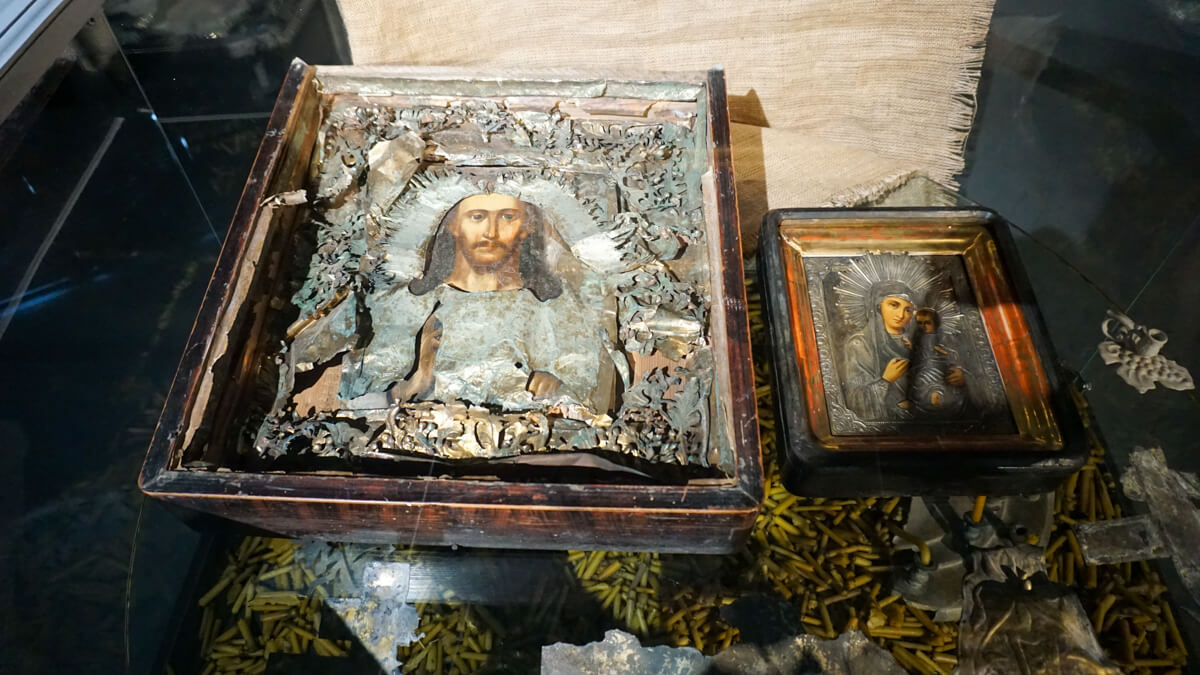
One of the most prominent exhibits was the damaged Descent from the Cross icon, which had a shard of a russian mine lodged in it. The icon was salvaged from the shelling-damaged church of St Demetrius of Rostov in the village of Makariv in the Kyiv region. The item became a symbol of both the destruction and the invincibility of spiritual artefacts.
The exhibition also features unique items directly related to the events of the full-scale war: a map of the plan to seize Kyiv by sabotage groups and samples of the enemy weapons russia used to conquer Ukrainian territory. The exhibition provides a complete picture of the tragedy’s scale and, at the same time, records history for future generations.
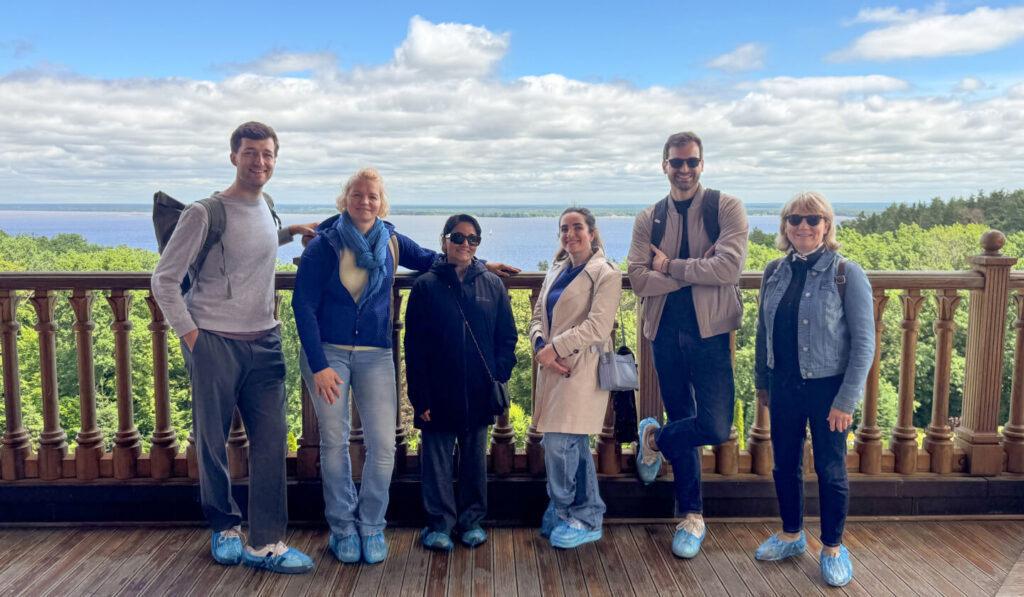
At the end of the visit, diplomats ascended the observation deck of the Mother Ukraine monument, situated at a height of 36.6 metres, offering panoramic views of the left bank of the capital.
The tour provided an important opportunity for representatives of the diplomatic corps to learn more about the Ukrainian perspective on historical events and the modern struggle for freedom; it also highlighted the importance of museums as venues for international dialogue.