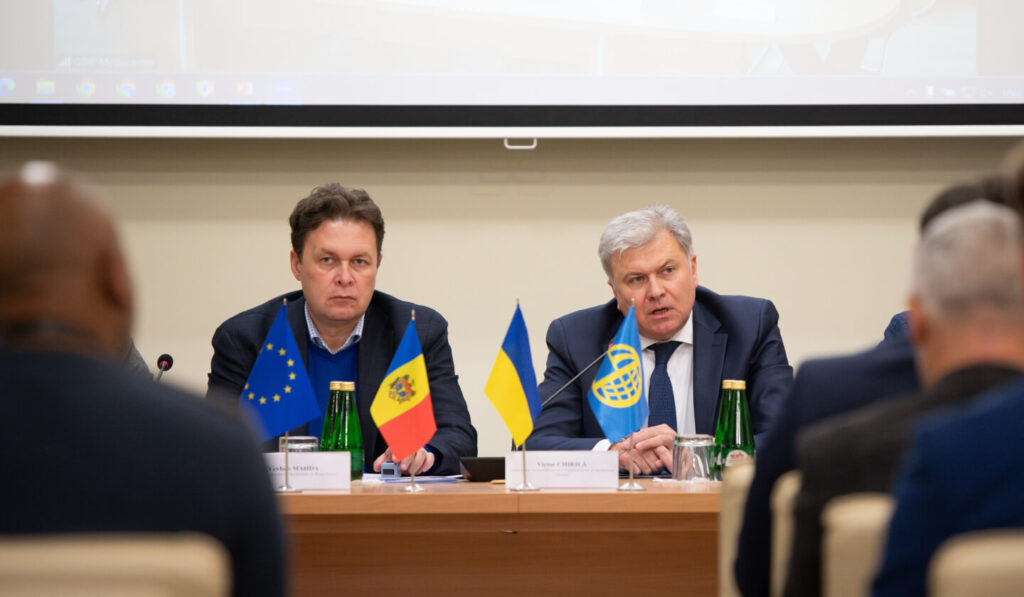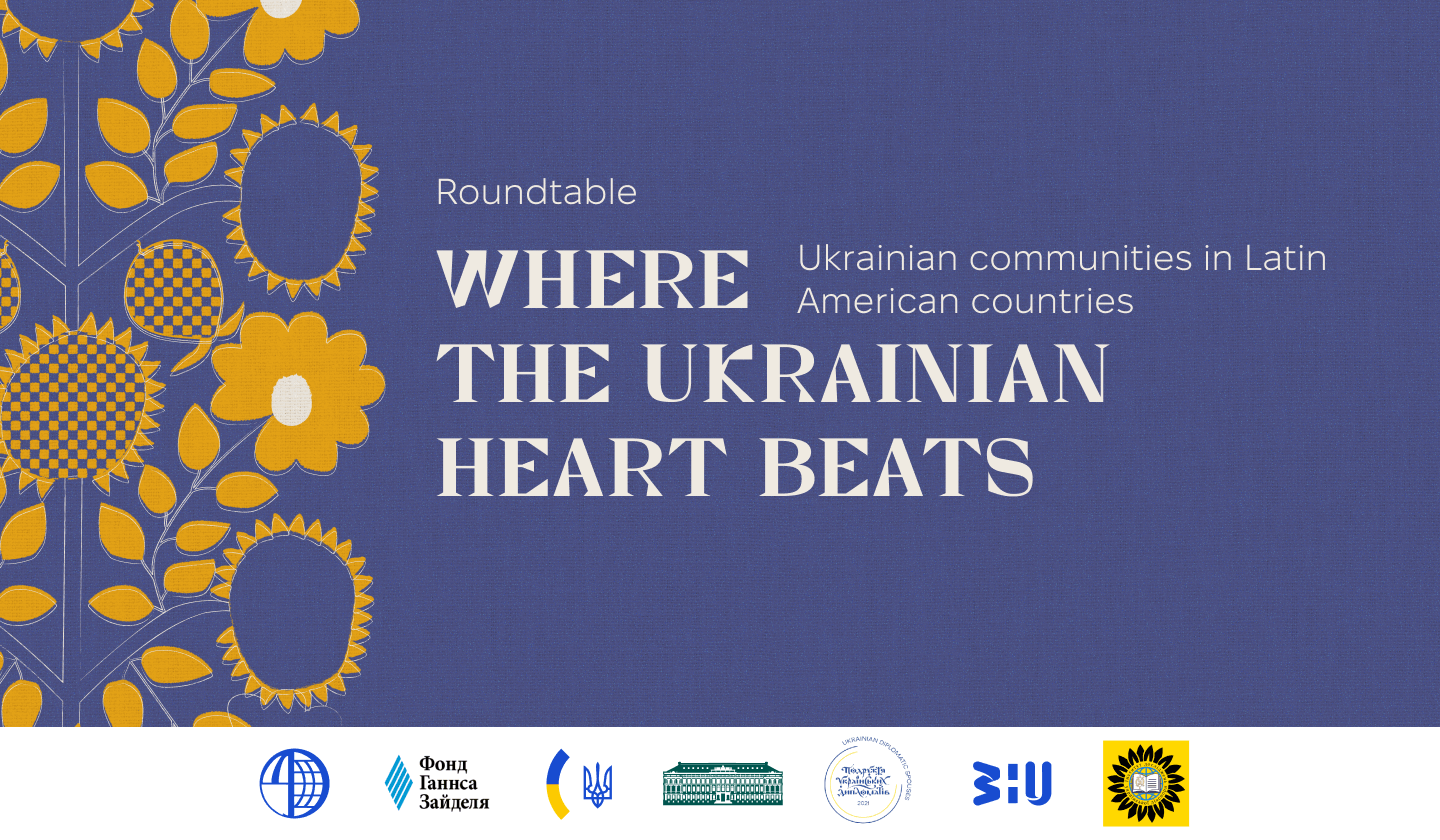
On Thursday, 18 December 2025, the Media Center of the State Enterprise ‘Directorate-General for Rendering Services to Diplomatic Missions’ hosted the round table titled Where the Ukrainian Heart Beats: Ukrainian Communities in Latin American Countries.
The event was organized by the GDIP team with the support of the Hanns Seidel Foundation in Ukraine, the Ministry of Foreign Affairs of Ukraine, the Professor Lubomyr Wynar Institute for the Ukrainian Diaspora Studies of the National University of Ostroh Academy, the Public Diplomacy Centre of the Diplomatic Academy of Ukraine, the Ukrainian Diplomatic Spouses Association, and West Ukrainian National University
Special recognition should be given to the significant role in preparing the round table, as well as the professional engagement and support provided by Alla Atamanenko, Doctor of History, Full Professor and Director of the Professor Lubomyr Wynar Institute for Ukrainian Diaspora Studies at the National University of Ostroh Academy, and Lesia Miliutenko, Third Secretary for Humanitarian Cooperation and Community Liaison at the Embassy of Ukraine in Mexico.
The round table continued a broader series of discussions focused on Ukraine’s engagement with the global Ukrainian community and the role of the diaspora in preserving national identity, shaping a positive image of Ukraine, and supporting the state during the full-scale war.
The purpose of the round table was to create a space for an open and substantive discussion on the activities and potential of Ukrainian communities in Latin American countries, their contribution to supporting Ukraine, and the development of ideas for further cooperation between the diaspora, Ukrainian institutions, and local partners.
Romana Kasiianchuk, Acting Head of the GDIP Media Center, Head of the Advertising and Publishing Department, and Serhii Borshchevskyi, Envoy Extraordinary and Plenipotentiary, writer, translator, expert at the Centre for russian Studies, moderated the event.
The round table was opened by Oksana Dramaretska, Director of the Department for Latin America and the Caribbean of the Ministry of Foreign Affairs of Ukraine, Ambassador Extraordinary and Plenipotentiary of Ukraine to Mexico (2020–25), Paul Grod, President of the Ukrainian World Congress, and Olena Maksymova, project coordinator and Deputy Director of the Hanns Seidel Foundation in Ukraine
‘Ukraine’s state resources are limited today, while Latin America is a complex and highly competitive information environment in which Russia has strong and systematically built positions. This is precisely why the role of Ukrainian communities is decisive,’ noted Oksana Dramaretska, highlighting specific steps taken by the state to cooperate with the diaspora and to develop Ukraine’s soft power instruments.
For his part, Paul Grod explained why Ukrainian communities in Latin America constitute an important political and societal asset, and what Ukraine can do to ensure its voice in the region is heard clearly, consistently, and convincingly. He also spoke about the importance of humanitarian, cultural, and educational initiatives, as well as the need to build genuine partnerships with local Ukrainian communities
‘Ukraine’s voice in Latin America will be strongest when it is voiced by Ukrainians themselves. We cannot win the battle for Latin America by addressing it from the outside, but we will succeed if we speak together with communities that are an inseparable part of the continent. They have credibility, influence, an understanding of local contexts, and networks of trust that no embassy or official visits from Ukraine can replicate. The Ukrainian World Congress works with these communities every day to ensure their voice remains strong, professional, and persuasive,’ Mr Grod added, urging state institutions to deepen cooperation with Ukrainian communities across the region.
During the discussion, participants addressed issues of cultural diplomacy, the preservation of identity, civic engagement and volunteer support for Ukraine during the war, institutional interaction with the state, as well as the potential for cooperation in the economic, educational, and interregional spheres.
Among the speakers were representatives of Ukrainian communities in Latin American countries who shared their experiences, namely Yarema Tavrydskyi (Argentina), Vittorio Sorotiuk (Brazil), Viktoriia Yanytska (Guatemala), Rostyslav Kalatsynskyi (Colombia), Oleksandra Kleinis (Mexico), Valeriia Morhunovska (Panama), Yuliia Dymar (Peru), and Kristina Kulida (Chile).
Representatives of Ukrainian embassies in the region also joined the active discussion, including those from Argentina, Brazil, and Mexico, as well as Yurii Diudin, Ambassador Extraordinary and Plenipotentiary of Ukraine to the Republic of Chile, and Ukrainian diplomats Stanislav Lazebnyk, Teofil Rendiuk, and Oleksandr Maznychenko.
An important outcome of the first round table of the series, held on 26 June 2025, was an analytical brief compiled by Alla Atamanenko and Nazar Martyniuk. The document systematically outlines the organisational structure of the global Ukrainian community, the diaspora’s contribution to preserving identity and promoting Ukraine, as well as the institutional and legal foundations of state cooperation with Ukrainians abroad.
It is through joint projects, a shared vision, and ongoing dialogue that the Ukrainian heart continues to beat far beyond Ukraine’s borders while remaining inseparably connected to it.